
This chickpea potato curry isn’t about fancy spices or complicated steps. It’s about that comforting, almost meat-like texture that makes you forget there’s no meat in the pot. When the potatoes break down slightly and the chickpeas soften, it feels like a warm hug on a chilly day.
I started making this after a long week when I craved something hearty but wanted to keep it simple and plant-based. The aroma of cumin and turmeric filling the kitchen, mingling with the earthy scent of cooked chickpeas and potatoes, always pulls me back to my childhood comfort foods. It’s honest food, cooked with a bit of chaos and a lot of love.
What I love most is how flexible this dish is—no need for perfection, just a good splash of lemon at the end, and it’s ready to serve. It’s a reminder that satisfying, nourishing meals don’t have to be complicated or fancy. Sometimes, the simplest ingredients come together to create something truly memorable.
This recipe explores how chickpeas and potatoes can mimic the comforting, hearty textures of traditional meat curries, making it a satisfying plant-based option that doesn’t compromise on richness or depth of flavor.
Transforming humble ingredients
- Making this dish always reminds me of cozy winter weekends spent with friends, passing around a steaming bowl with a side of rice.
- There’s a quiet pride I feel when I see someone’s surprised face at how hearty and satisfying a plant-based curry can be.
- Cooking this brings back my grandmother’s kitchen—those smells of cumin and garlic blending into something familiar and warm.
- I love that this recipe turns simple ingredients into something that feels like a small victory—no fuss, just flavor and comfort.
The story behind this recipe
- This curry came about during a particularly chaotic week when I needed something nourishing but effortless. I was tired of the usual, and somehow, I kept reaching for those humble ingredients—canned chickpeas and potatoes—that hold so much potential. It’s funny how a simple dish can turn into a little sanctuary in the middle of a hectic day.
- I started tinkering with the spices to mimic that familiar, comforting heartiness I crave from traditional curries. The moment I realized the potatoes and chickpeas could soften just enough to create a rich, almost meaty texture, I knew I was onto something. It’s not pretty, but it’s honest food—filling, straightforward, and made with a kind of reckless love.
- heading: ‘The story behind this recipe’
Historical and cultural roots
- This dish harks back to humble kitchen staples common in Mediterranean and Middle Eastern households, where chickpeas and potatoes are everyday comfort foods.
- Historically, this type of curry was a practical way to stretch ingredients, turning simple pantry items into hearty, filling meals for large families.
- The use of potatoes in curry recipes is a relatively recent adaptation, inspired by the desire for extra creaminess and bulk without meat.
- In many cultures, chickpeas symbolize fertility and abundance, making this dish a festive, nourishing choice for gatherings.
Key ingredients and tips
- Chickpeas: I prefer canned for convenience, but dried work too—just soak and cook until tender, the aroma of earth and nutty notes filling the air.
- Potatoes: Russets or Yukon Golds break down nicely, adding a creamy texture that mimics meat; keep an eye on them so they don’t turn to mush.
- Coconut Milk: I use full-fat for richness, the luscious, slightly sweet aroma making the curry feel indulgent—if you want lighter, swap with almond milk.
- Tomatoes: Fresh or canned, they add acidity that balances the spices—look for ripe, juicy tomatoes that smell like summer in July.
- Spices: A blend of cumin, turmeric, and garam masala—toast them briefly in oil until fragrant, filling your kitchen with warm, smoky scents.
- Onion & Garlic: Start with a generous sauté until golden—this builds the savory base, and the smell alone makes everyone hungry.
- Lemon: A splash at the end brightens everything—don’t skip it, even a small squeeze will lift the dish with citrus sparkle.
Spotlight on Key Ingredients
Chickpeas:
- I prefer canned for convenience, but dried work too—just soak and cook until tender, the aroma of earth and nutty notes filling the air.
- Potatoes: Russets or Yukon Golds break down nicely, adding a creamy texture that mimics meat; keep an eye on them so they don’t turn to mush.
Tomatoes:
- Coconut Milk: I use full-fat for richness, the luscious, slightly sweet aroma making the curry feel indulgent—if you want lighter, swap with almond milk.
- Fresh or canned, they add acidity that balances the spices—look for ripe, juicy tomatoes that smell like summer in July.
Ingredient swap ideas
- Dairy-Free: Swap coconut milk for almond or cashew milk—less creamy but still adds a gentle nutty note.
- Potatoes: Sweet potatoes work well for a sweeter, softer texture; just adjust cooking time slightly.
- Chickpeas: Use cooked lentils if you prefer a different legume or need a quick alternative.
- Spices: Fresh ginger or garlic can replace dried; they bring a sharper, more vibrant aroma.
- Tomatoes: Roasted red peppers blended in can add smoky sweetness if tomatoes are unavailable.
- Oil: Use ghee or olive oil for a different flavor profile; ghee adds richness, olive oil adds a fruity note.
- Cilantro: Parsley can substitute if you dislike cilantro’s distinctive flavor, though it changes the freshness.
Equipment & Tools
- Large heavy-bottomed pan: For even heat and to prevent burning.
- Wooden spoon: To stir ingredients without scratching the pan.
- Sharp knife: For chopping onions, garlic, ginger, and potatoes efficiently.
- Cutting board: To prepare vegetables safely and cleanly.
- Ladle or spoon: For tasting and serving.
Step-by-step guide to chickpea potato curry
- Gather your equipment: a large heavy-bottomed pan, a wooden spoon, a sharp knife, and a cutting board. The pan should be big enough to hold everything comfortably and have a lid nearby.
- Heat 2 tbsp of oil over medium heat (about 160°C / 320°F). Add a teaspoon of cumin seeds. When they crackle and release aroma, about 30 seconds, you’re ready for the next step.
- Dice 1 large onion into small pieces, about 1 cm (0.4 inch). Add to the hot oil. Sauté until golden, around 7-8 minutes, stirring occasionally. The onion should be soft and fragrant.
- Add 3 minced garlic cloves and 1 tsp grated ginger. Cook for 1 minute until fragrant but not burnt. Smell the spicy, earthy aroma filling your kitchen.
- Stir in 1 tsp turmeric, 1 tsp cumin powder, and 1 tsp garam masala. Toast the spices for 30 seconds until fragrant, stirring constantly to avoid burning. The mix should smell warm and smoky.
- Add 2 medium-sized potatoes, peeled and diced into 2 cm (0.8 inch) cubes. Cook for 5 minutes, stirring occasionally, until they start to soften and turn slightly golden around the edges.
- Pour in a 400g (14 oz) can of chickpeas, drained and rinsed. Stir to combine. Cook for 2 minutes, letting the chickpeas absorb the spice aroma, which should be nutty and warm.
- Add 400g (14 oz) canned diced tomatoes or fresh ripe tomatoes, chopped small. Simmer uncovered on low-medium heat (about 85°C / 185°F) for 15 minutes, stirring occasionally. The sauce should thicken slightly, and the tomatoes will break down.
- Pour in 200 ml (¾ cup) full-fat coconut milk. Stir well, and let simmer for another 10 minutes. The curry should be fragrant with a rich, oozy consistency, and the potatoes will be tender.
- Finish with a squeeze of fresh lemon juice (about 1 tbsp). Taste and adjust salt. If too thick, add a splash of hot water and stir to loosen it up. The curry should be vibrant and well-seasoned.
- Turn off the heat. Let it rest for 5 minutes, covered. This allows flavors to meld and the curry to settle into a harmonious, hearty dish.
- Serve hot, garnished with chopped cilantro if desired. Pair with rice or flatbread for a complete meal. The curry should be thick, with tender potatoes and chickpeas, and a fragrant, slightly smoky sauce.
Let the curry sit covered for 5 minutes. This helps flavors meld and thickens the sauce slightly. Garnish with fresh cilantro if you like, then serve hot with rice or bread.
How to Know It’s Done
- Potatoes are tender and break apart slightly when pressed with a spoon.
- The sauce is thickened and has a vibrant, aromatic smell with spices well integrated.
- The curry is bubbling gently at the edges, with a rich, creamy appearance.
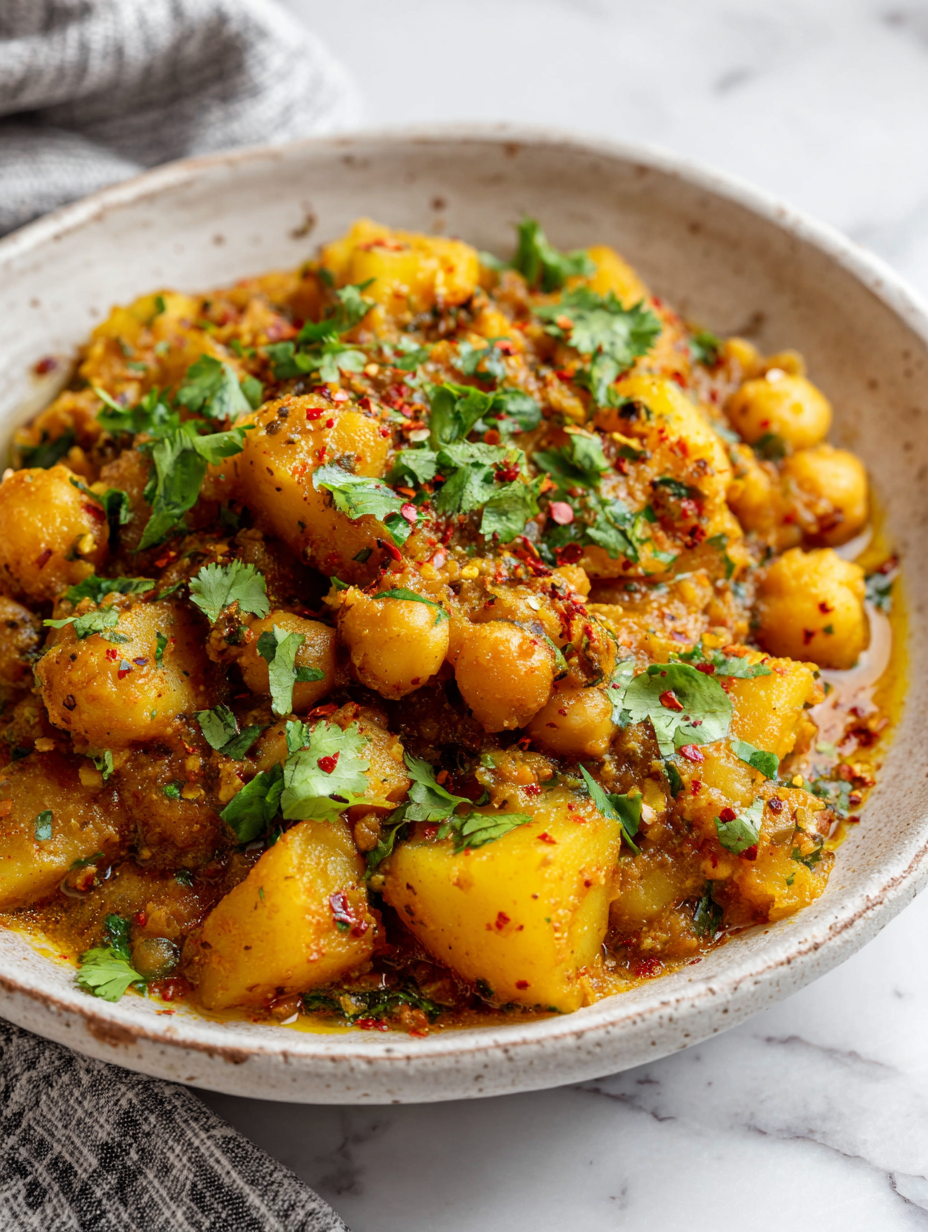
Chickpea Potato Curry
Ingredients
Equipment
Method
- Heat the oil in a large heavy-bottomed pan over medium heat until shimmering. Add the cumin seeds and cook for about 30 seconds until they crackle and release a warm aroma.
- Add the chopped onion to the pan and sauté, stirring occasionally, until it turns golden and soft, about 7-8 minutes. The kitchen will fill with a sweet, caramelized smell.
- Stir in the minced garlic and grated ginger, cooking for another minute until fragrant and slightly bubbling.
- Add the turmeric, cumin powder, and garam masala to the pan, stirring constantly for about 30 seconds to toast the spices and release their warm, smoky scent.
- Introduce the diced potatoes to the pan, stirring well to coat them in the spice mixture. Cook for about 5 minutes, allowing them to start softening and develop a slight golden edge.
- Add the drained chickpeas, stirring to combine everything evenly. Let cook for 2 minutes, allowing the flavors to meld.
- Pour in the diced tomatoes, stirring to incorporate. Lower the heat to medium-low and simmer uncovered for about 15 minutes, until the sauce thickens slightly and the potatoes are tender enough to break apart gently when pressed.
- Stir in the coconut milk, mixing thoroughly to create a rich, creamy sauce. Continue simmering for another 10 minutes, letting the flavors deepen and the curry thicken to a luscious consistency.
- Turn off the heat and squeeze in the lemon juice. Taste and season with salt as needed. Let the curry sit covered for 5 minutes to allow flavors to meld beautifully.
- Give the curry a gentle stir, then serve hot, garnished with fresh herbs if desired. The dish should be thick, with soft, broken-down potatoes and chickpeas swimming in a fragrant, vibrant sauce.
Pro tips for perfect curry
- Bolded Mini-Head: Toast spices briefly in oil until fragrant to unlock their full aroma and flavor.
- Bolded Mini-Head: Use a wide pan for even heat distribution, helping potatoes and chickpeas cook uniformly.
- Bolded Mini-Head: Sauté onions until golden to develop sweetness and deepen the curry’s base flavor.
- Bolded Mini-Head: Add lemon juice off the heat to preserve its bright, fresh tang that lifts the dish.
- Bolded Mini-Head: Simmer gently and avoid high heat to prevent burning spices and sticking to the pan.
- Bolded Mini-Head: Use canned chickpeas for quick cooking or dried ones soaked overnight for extra tenderness.
- Bolded Mini-Head: Rest the curry covered for 5 minutes after cooking—this melds flavors and improves texture.
Common mistakes and how to fix them
- FORGOT to adjust heat? Lower it to prevent burning spices or ingredients.
- DUMPED too much water? Simmer longer to thicken or add a splash of coconut milk.
- OVER-TORCHED spices? Remove from heat immediately and start with fresh spices.
- SKIPPED resting time? Let it sit for 5 minutes for better flavor melding.
Quick fixes and pantry swaps
- If sauce is too thick, splash in hot water and stir until loosened with shimmer.
- When spices burn, dump and start over with fresh ones for smoky aroma.
- Splash lemon juice at the end to brighten dull flavors instantly.
- Patch a burnt pan by deglazing quickly with water to lift residue and prevent bitterness.
- Shield overcooked potatoes with a quick drizzle of coconut milk to regain creaminess.
Prep, store, and reheat tips
- Chickpeas and potatoes can be cooked ahead; store in an airtight container in the fridge for up to 3 days, where they develop a deeper, more integrated flavor.
- Reheating the curry gently over low heat, stirring occasionally, allows flavors to re-blend; expect a slightly thicker, more concentrated sauce with a warm aroma.
- For freezer storage, portion into freezer-safe containers and freeze up to 2 months; expect a slight change in texture, but still delicious.
- Thaw in the fridge overnight, then reheat slowly on the stove, checking for a simmer and adjusting seasoning as needed—smell for that rich, spicy aroma as a cue.
Top questions about chickpea potato curry
1. Can I use dried chickpeas?
Canned chickpeas are quick and tender, but dried ones soaked overnight add a nuttier flavor and firmer texture.
2. Can I make this without coconut milk?
Yes, but soak and cook them first; they take longer and develop a richer, earthier taste.
3. Is coconut milk necessary?
Sure, swap with almond or cashew milk for a lighter, less creamy curry that still tastes delicious.
4. How should I prepare the potatoes?
Potatoes should be diced into small, even pieces so they cook through and break down slightly, mimicking meat textures.
5. When should I add lemon juice?
Add lemon juice at the end to brighten the flavors and balance the spices with a fresh, zingy note.
6. What pan size works best?
Use a wide pan for even cooking and to prevent overcrowding, which helps ingredients cook properly.
7. My curry is too thick, what do I do?
If the sauce gets too thick, stir in a splash of hot water or coconut milk to loosen it up.
8. How do I prevent spices from burning?
Overcooking spices can lead to bitterness; toast them briefly until fragrant, then add liquids quickly.
9. Should I let the curry rest before serving?
Let the curry rest covered for 5 minutes after cooking to allow flavors to meld and develop.
10. How do I reheat leftovers?
Reheat gently on the stove, stirring occasionally, until steaming and fragrant—expect some thickening.
This dish is a reminder that simple ingredients can create something deeply satisfying, especially when cooked with a bit of reckless love and patience. It’s perfect for those chilly evenings when comfort food is all you need to feel grounded.
In the end, it’s about the warmth of flavors and the familiarity of textures—something to lean on when life feels chaotic or when you just crave honest, hearty food that fills both belly and soul.