
Arrabbiata sauce has always felt like a fiery declaration on a plate—bright, bold, and unapologetically spicy. Making a vegan version pushes me to focus on fresh ingredients, letting natural heat and vibrant flavors shine without heavy cream or cheese. It’s a reminder that plant-based cooking can be full of personality, not just simple sustenance.
This recipe is a bit of a love letter to those nights when I crave something fierce but want to keep it honest and straightforward. The aroma of garlic and chili simmering together, the slight sizzle of tomatoes breaking down—those are the moments that make me feel connected to the dish. It’s spicy, it’s fresh, and it’s a little bit chaotic—in the best way.
Focusing on the fiery, bold personality of arrabbiata sauce, this vegan twist emphasizes simplicity and freshness, proving that plant-based can be unapologetically spicy and comforting without relying on traditional ingredients.
The story behind this recipe
- This recipe came from a night I accidentally burned a batch of traditional arrabbiata. The smoky, charred notes made me think about how sometimes imperfections lead to new ideas. I wanted to keep that fiery spirit but with a cleaner, plant-based twist. It’s become my go-to when I need something quick, honest, and packed with punch.
- Cooking it reminds me of late summer evenings with friends, sharing spicy pasta straight from the pot. The heat, the bright acidity of the tomatoes, and the fresh basil—those moments feel raw and real. I love how a simple dish can spark so much joy and chaos at the table.
Ingredient breakdown
- Garlic: I love crushing garlic until it’s almost pasty, releasing a fragrant, pungent aroma that wakes up the whole kitchen. You might want to toast it lightly for a deeper, nutty flavor.
- Red chili flakes: I sprinkle a generous pinch—sometimes more—until I hear that faint crackle in the oil. Adjust to your heat tolerance, but don’t skimp on that initial sizzle.
- Canned tomatoes: I prefer whole peeled, crushed by hand to keep the sauce lively and fresh. Look for bright, plump tomatoes—they’ll give that oozy, vibrant base.
- Olive oil: I use a good extra virgin for a fruity, peppery note that coats everything. A splash at the start is key; skip it and the base feels flat and dull.
- Fresh basil: I tear it just before adding to keep the aroma bright and herbal. That slight crackle when it hits the hot sauce is my signal to turn off the heat.
- Salt: I season gradually, tasting as I go—sometimes a pinch more at the end to balance the fiery and acidity. It’s the secret to making everything pop.
- Pasta: I opt for a sturdy, spaghetti-style noodle, cooked al dente—perfect for catching bits of sauce and holding up to the spice. Don’t forget to save some pasta water to loosen the sauce if needed.
Spotlight on key ingredients
Canned Tomatoes:
- Garlic: I love crushing garlic until it’s almost pasty, releasing a fragrant, pungent aroma that wakes up the whole kitchen. You might want to toast it lightly for a deeper, nutty flavor.
- Red chili flakes: I sprinkle a generous pinch—sometimes more—until I hear that faint crackle in the oil. Adjust to your heat tolerance, but don’t skimp on that initial sizzle.
- I prefer whole peeled, crushed by hand to keep the sauce lively and fresh. Look for bright, plump tomatoes—they’ll give that oozy, vibrant base.
Garlic:
- I love crushing garlic until it’s almost pasty, releasing a fragrant, pungent aroma that wakes up the whole kitchen. You might want to toast it lightly for a deeper, nutty flavor.
- Red chili flakes: I sprinkle a generous pinch—sometimes more—until I hear that faint crackle in the oil. Adjust to your heat tolerance, but don’t skimp on that initial sizzle.
Notes for ingredient swaps
- Fresh Tomatoes: I prefer ripe, juicy tomatoes for a bright, acidic punch—if unavailable, use high-quality canned peeled tomatoes for consistency.
- Garlic: I love crushing garlic until it’s almost pasty, releasing a fragrant, pungent aroma that wakes up the whole kitchen. You might want to toast it lightly for a deeper, nutty flavor.
- Chili Flakes: I sprinkle a generous pinch—sometimes more—until I hear that faint crackle in the oil. Adjust to your heat tolerance, but don’t skimp on that initial sizzle.
- Olive Oil: I use a good extra virgin for a fruity, peppery note that coats everything. A splash at the start is key; skip it and the base feels flat and dull.
- Basil: I tear it just before adding to keep the aroma bright and herbal. That slight crackle when it hits the hot sauce is my signal to turn off the heat.
- Pasta: I opt for a sturdy, spaghetti-style noodle, cooked al dente—perfect for catching bits of sauce and holding up to the spice. Don’t forget to save some pasta water to loosen the sauce if needed.
- Vegan Parmesan or Nutritional Yeast: For added cheesy depth, sprinkle on top. It won’t be the same as dairy cheese, but it adds a savory, umami hit that balances the heat.
Equipment & Tools
- Large skillet: To cook the sauce evenly and allow room for tossing pasta.
- Wooden spoon: For stirring without scratching the skillet and to feel the sauce’s consistency.
- Knife and cutting board: To chop garlic and basil quickly and safely.
- Pot for boiling pasta: To cook the spaghetti to perfect al dente.
- Measuring cup: To reserve pasta water for adjusting sauce consistency.
Step-by-step guide to Vegan Arrabbiata
- Gather your equipment: a large skillet (preferably non-stick), a wooden spoon for stirring, a sharp knife, and a cutting board. Have your pasta boiling water ready, seasoned generously with salt.
- Start by heating 2 tablespoons of olive oil over medium heat (about 160°C / 320°F). When shimmering, add 4 minced garlic cloves. Cook until fragrant, about 30 seconds, until you smell that sharp, toasted aroma but don’t let it burn.
- Toss in 1 teaspoon of red chili flakes. Sizzle for 10-15 seconds, listening for that faint crackle. If it smokes heavily, turn down the heat. This is where the heat kicks in, so adjust if necessary.
- Add 1 can (400g) of crushed tomatoes. Stir well, scraping any bits off the bottom. Turn the heat to medium-low (about 120°C / 250°F). Let it simmer gently, uncovered, for 10-12 minutes, stirring occasionally until it thickens slightly and turns a deep ruby color.
- While the sauce simmers, cook 400g of spaghetti until al dente, about 8 minutes. Reserve ½ cup of pasta water before draining. This starchy water can help loosen the sauce if it thickens too much.
- Chop a handful of fresh basil roughly. When the sauce has thickened and smells rich with garlic and chili, turn off the heat. Stir in half of the basil, tasting and adjusting salt as needed. The sauce should be fiery, bright, with a slight oily sheen and fresh herbal aroma.
- Combine the drained pasta with the sauce in the skillet. Toss well to coat each strand thoroughly. If the sauce feels too thick or sticky, add a splash of reserved pasta water and stir until shiny and loose. Serve immediately, garnished with remaining basil and a drizzle of olive oil.
Serve immediately in warmed bowls, garnished with extra basil and a drizzle of olive oil. No resting needed; enjoy the fiery freshness right away.
How to Know It’s Done
- The sauce should be a vibrant red, slightly thickened, with a fragrant garlic and chili aroma.
- Pasta should be al dente, with a slight bite, not mushy or overly firm.
- The sauce should cling to the pasta, glossy and fiery, with visible flecks of chili and basil.
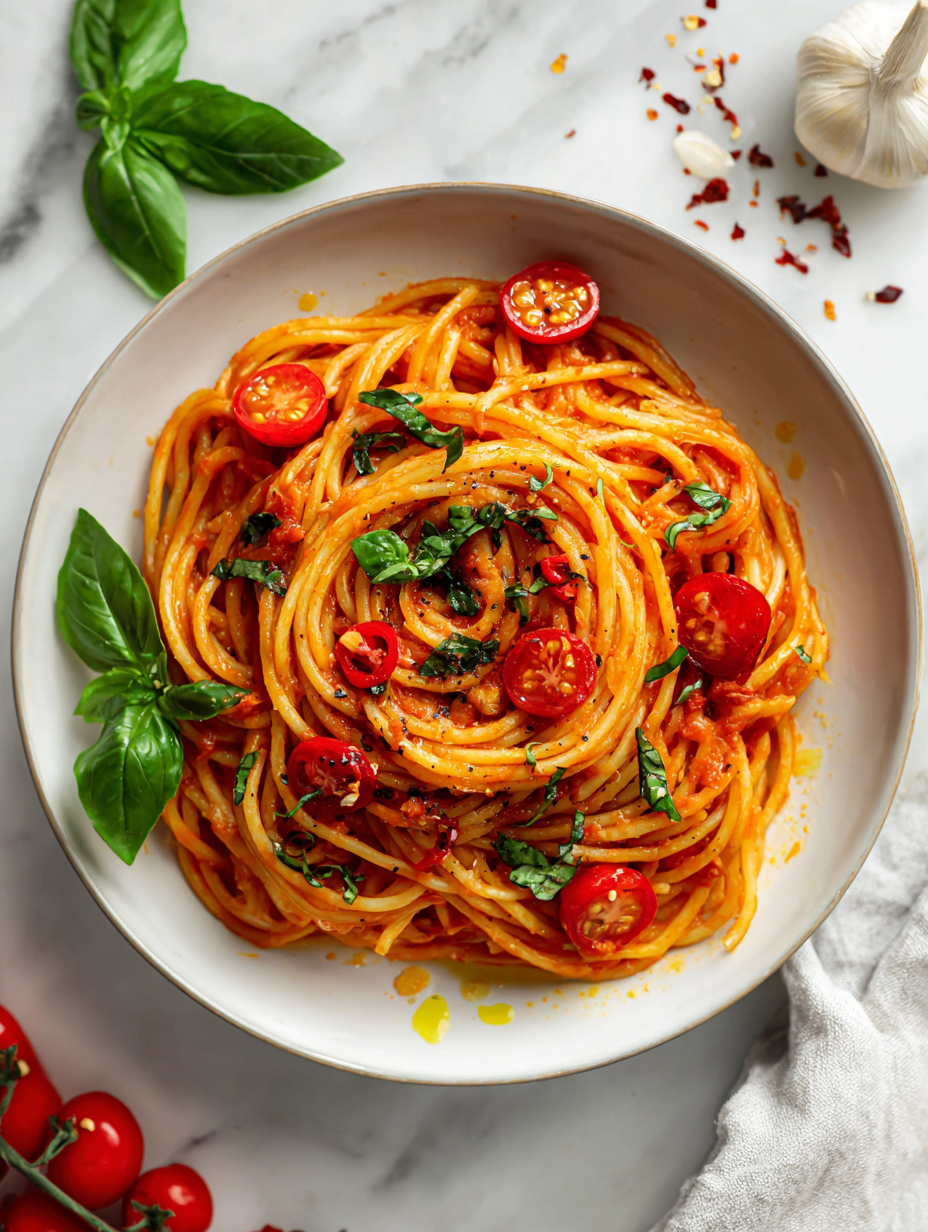
Vegan Arrabbiata Pasta
Ingredients
Equipment
Method
- Bring a large pot of salted water to a boil and cook the spaghetti until just al dente, about 8 minutes. Drain and set aside, reserving a little pasta water.
- Heat olive oil in a large skillet over medium heat until shimmering and fragrant. Add the crushed garlic and cook for about 30 seconds until it releases a sharp, toasted aroma, stirring constantly to prevent burning.
- Sprinkle in the red chili flakes and sizzle for another 10-15 seconds until you hear a faint crackle and see the oil turn a slight reddish hue, signaling the heat is unlocked.
- Add the crushed tomatoes to the skillet, stirring well to combine with the garlic and chili. Bring the mixture to a gentle simmer, then reduce the heat to low and let it cook uncovered for 10-12 minutes, stirring occasionally, until the sauce thickens slightly and turns a vibrant ruby color.
- While the sauce simmers, tear fresh basil leaves roughly and set aside. Taste the sauce and add salt gradually, adjusting to your preferred level of seasoning.
- Once the sauce has thickened and smells fragrant with garlic and chili, turn off the heat. Mix in half of the torn basil, allowing its aroma to infuse the sauce.
- Add the cooked spaghetti to the skillet, tossing gently to coat each strand evenly with the fiery tomato sauce. If the sauce feels too thick, loosen it with a splash of reserved pasta water, stirring until glossy and smooth.
- Transfer the pasta to serving bowls, garnish with the remaining torn basil leaves, and finish with a drizzle of olive oil for extra shine and flavor. Serve immediately while hot and fragrant.
Pro tips for fiery, fresh arrabbiata
- Bold chili: Sizzle the flakes until you hear a faint crackle to unlock full heat and flavor.
- Garlic care: Crush garlic until pasty for maximum aroma release; toast lightly for nuttiness.
- Tomato texture: Crush canned tomatoes by hand to keep the sauce lively and fresh, rather than pureed.
- Oil the pan: Use a good splash of olive oil at the start for a fragrant, rich base; don’t skimp.
- Basil timing: Tear basil just before adding to preserve aroma and avoid overcooking, which dulls flavor.
- Pasta water: Save some starchy pasta water before draining; it helps loosen and glossy the sauce.
- Taste as you go: Adjust salt and spice gradually, tasting often, to balance fiery and bright flavors.
Common mistakes and how to fix them
- FORGOT to check sauce consistency? Thicken with tomato paste or simmer longer until glossy.
- DUMPED pasta water too early? Save some for adjusting sauce; it adds silkiness and flavor.
- OVER-TORCHED garlic? Turn down heat immediately and add more oil to prevent bitterness.
- MISSED the salt? Taste and season gradually; it balances the fiery heat and brightens flavors.
Quick fixes and pantry swaps
- When sauce is too thick, splash in hot pasta water and stir until silky.
- If sauce lacks heat, sprinkle more chili flakes and let them sizzle for 10 seconds.
- Splash olive oil if sauce feels dull or flat, for brighter flavor and sheen.
- Patch over under-seasoned sauce with a pinch of salt and fresh basil for freshness.
- Shield burning garlic by lowering heat immediately and adding a splash of water.
Prep, store, and reheat tips
- Prepare the sauce up to two days in advance; store in an airtight container in the fridge. The flavors deepen overnight, developing a richer, more layered heat.
- Refrigerate the cooked pasta separately for up to 24 hours; reheat by tossing in hot water or briefly steaming to prevent it from drying out and losing texture.
- For longer storage, freeze the sauce in portions for up to 3 months. Thaw in the fridge overnight, then gently reheat, smelling for that fiery, tomato-rich aroma.
- Reheat the sauce on low heat, stirring frequently until steaming and bubbly. The aroma of garlic and chili should be lively, with the sauce glossy and slightly thickened.
- Keep an eye on the sauce’s texture during reheating; if it thickens too much, loosen with a splash of pasta water or a little vegetable broth until it shimmers again.
Top questions about Vegan Arrabbiata
1. Can I use fresh tomatoes instead of canned?
Yes, you can use fresh tomatoes, but canned crushed tomatoes give a more consistent, oozy base with bright flavor.
2. Can I make it milder or spicier?
Absolutely. Use your favorite hot chili flakes or even fresh chopped chilies to dial up the heat, just add them early with the garlic.
3. Can I substitute the olive oil?
Olive oil adds a fruity, peppery richness. For a lighter version, swap with a neutral oil like sunflower but lose some depth.
4. Can I add cheese or a cheese substitute?
Yes, nutritional yeast adds cheesy umami flavor, making the dish more savory without dairy. Sprinkle on top right before serving.
5. How do I cook the pasta perfectly?
Cook pasta until just al dente, usually 8-10 minutes. Overcooking will make it mushy and less good at catching the sauce.
6. How do I reheat leftovers without losing flavor?
Reheat gently on the stove in a skillet with a splash of water or broth. The sauce should shimmer and smell fragrant again.
7. How should I prepare garlic for best flavor?
Use a sharp knife to crush garlic for maximum aroma. Toast lightly to deepen flavor, but watch it so it doesn’t burn.
8. How do I know when the sauce is ready?
Simmer the sauce uncovered until it thickens slightly and deepens in color—about 10-12 minutes. It should cling to pasta with a glossy sheen.
9. How do I balance the flavors?
Adjust seasoning at the end, tasting for balance of heat, acidity, and salt. It’s key to get that fiery, bright punch.
10. When should I add basil?
Stir fresh basil just before serving for maximum aroma. Tear it instead of chopping to release oils and avoid bitterness.
This fiery vegan arrabbiata isn’t just a quick dinner; it’s a reminder that bold, honest flavors come from simple, well-chosen ingredients. When that spicy aroma hits your nose, it pulls you right into the kitchen, ready for a satisfying, imperfect plate.
In a world full of complex recipes, this one keeps it raw and real—just like those nights when all you want is something honest, hot, and full of personality. It’s a dish that makes me feel connected to the act of cooking, messy edges and all, and I hope it does the same for you.