
Many takeout nights leave me craving something quicker and more honest—something I can tweak and make my own without the rush. Vegan chow mein is that dish for me. It’s simple but bold, with soy, garlic, and a touch of sesame that somehow hits just right, even on my busiest days.
What I love about this recipe is how forgiving it is. You can swap in whatever vegetables you have on hand, and the sauce can be adjusted to suit your taste—more tang, more sweetness, or a little spice. It’s a playful, adaptable dish that makes me feel like I’ve brought a bit of Chinatown into my kitchen, no matter the hour.
Focusing on how to balance authentic flavors with accessible, everyday ingredients to make vegan chow mein that’s both satisfying and quick for busy weeknights, while emphasizing the importance of personal touches like homemade sauce adjustments.
The story behind this recipe
- This recipe started as a way to reclaim my favorite takeout dish without the usual guilt or questionable ingredients. I wanted something quick, honest, and flexible enough to adapt to whatever veggies I had. The first time I threw this together, the smells of garlic and toasted sesame filled my tiny kitchen, and I knew I had hit on something good.
- Over the years, I’ve tweaked the sauce, swapping soy for coconut aminos, adding a splash of rice vinegar for brightness, and adjusting the noodles for a perfect chewy bite. It’s become my go-to when I need comfort fast but still want that savory, slightly smoky flavor that reminds me of evenings spent sharing meals with friends.
- heading: The story behind this recipe
Ingredient breakdown
- Wheat noodles: I prefer the chewy, slightly springy texture, so I opt for fresh lo mein noodles. If you only have spaghetti, that works too—just cook until al dente and toss with a splash of sesame oil to prevent sticking.
- Soy sauce: It’s the backbone of the flavor—salty, umami-rich, with a hint of sweetness. If you want a milder taste, try coconut aminos, which have a softer, less sharp saltiness and are slightly sweeter.
- Vegetables: I love using bell peppers, carrots, and bok choy for crunch and brightness. If you’re out of one, shredded cabbage or snap peas add a nice crisp. Keep the veggies sliced thin for quick stir-frying and maximum flavor absorption.
- Garlic and ginger: These are the aromatics that make or break the dish. I crush garlic to release more aroma, and grate fresh ginger for a zing that’s bright and spicy. Dried garlic powder? It’s okay in a pinch but doesn’t quite hit the same depth.
- Sesame oil: Just a drizzle at the end adds that smoky, nutty punch. Don’t overdo it—its flavor is potent. Toasted sesame seeds? They add crunch and a toasty aroma if you sprinkle them on just before serving.
- Cooking oil: I usually stick with vegetable or canola for high heat, but a splash of toasted sesame oil in the stir-fry adds flavor. Keep the heat medium-high to sizzle without burning the oil—look for that gentle crackle and smell of toasted goodness.
- Optional toppings: Green onions, chili flakes, or a squeeze of lime can brighten the dish. I like adding a few drops of hot sauce if I want extra kick—balance it out with a touch of sugar if the sauce feels too sharp.
Spotlight on key ingredients
Wheat noodles:
- I prefer the chewy, slightly springy texture, so I opt for fresh lo mein noodles. If you only have spaghetti, that works too—just cook until al dente and toss with a splash of sesame oil to prevent sticking.
- Soy sauce: It’s the backbone of the flavor—salty, umami-rich, with a hint of sweetness. If you want a milder taste, try coconut aminos, which have a softer, less sharp saltiness and are slightly sweeter.
Soy sauce:
- Vegetables: I love using bell peppers, carrots, and bok choy for crunch and brightness. If you’re out of one, shredded cabbage or snap peas add a nice crisp. Keep the veggies sliced thin for quick stir-frying and maximum flavor absorption.
- ingredient
Notes for ingredient swaps
- Wheat Noodles: I prefer fresh lo mein, but rice noodles work well if you want a gluten-free version—just soak until soft and drain thoroughly.
- Soy Sauce: Use coconut aminos for a milder, less salty flavor; it’s a good swap if you’re sensitive to salt or soy.
- Vegetables: If bell peppers or carrots aren’t available, shredded zucchini or snap peas add crunch and color—slice thin for quick stir-frying.
- Garlic & Ginger: Dried garlic powder and ground ginger can stand in for fresh, but they lack that punch of aroma and zing. Use sparingly.
- Sesame Oil: Toasted sesame oil is intense—use sparingly, about half the amount if substituting with light vegetable oil. For extra nutty flavor, sprinkle toasted sesame seeds at the end.
- Cooking Oils: If you’re out of vegetable oil, light canola or avocado oil works—just avoid olive oil, which can burn at high heat.
- Toppings: Green onions and chili flakes are classic, but fresh basil or cilantro can add a different herbal brightness—add just before serving for fresh flavor.
Equipment & Tools
- Large pot: Boil noodles efficiently
- Wok or deep skillet: High heat stir-frying
- Tongs: Tossing noodles and veggies
- Sharp knife: Precise slicing of vegetables and aromatics
- Measuring spoons and cups: Accurate sauce mixing
Step-by-step guide to vegan chow mein
- Gather all your ingredients and tools before starting—mise en place makes stir-frying smoother. Use a large wok or deep skillet for quick heat distribution. Have your noodles, vegetables, sauces, and utensils ready.
- Cook the noodles: Bring a large pot of water to boil (100°C / 212°F). Add noodles and cook until just al dente, about 2-3 minutes for fresh, or follow package instructions. Drain and rinse under cold water to stop cooking. Toss with a teaspoon of sesame oil to prevent sticking.
- Prep your vegetables: Thinly slice bell peppers, carrots, and any greens like bok choy or cabbage. Mince garlic and ginger finely—this helps them cook quickly and evenly.
- Heat your wok over high heat until shimmering (around 200°C / 392°F). Pour in about 2 tablespoons of vegetable oil and swirl to coat. Once hot, add garlic and ginger. Cook until fragrant, about 30 seconds, stirring constantly. The smell should be sharp and inviting.
- Add vegetables: Toss in the harder veggies like carrots and peppers first. Stir-fry for 2-3 minutes until they start to soften and become slightly charred around the edges. Add quicker-cooking greens last, cooking for another minute until wilted and vibrant.
- Pour in sauce: Mix together soy sauce, a splash of rice vinegar, a teaspoon of maple syrup or sugar, and a dash of chili flakes if you like heat. Add to the wok and toss to coat all ingredients evenly. You should hear a gentle sizzle and see the sauce thicken slightly.
- Combine noodles: Add the drained noodles to the wok. Use tongs to toss everything together—ensure the noodles soak up the sauce and veggies are evenly distributed. Cook for 1-2 minutes until heated through and slightly glossy.
- Finish and plate: Drizzle with a teaspoon of toasted sesame oil, sprinkle with chopped green onions and sesame seeds if desired. Taste and adjust seasoning with more soy or spice if needed. Serve immediately while hot and fragrant.
Serve immediately on warm plates, garnished with chopped scallions and sesame seeds. No resting needed; enjoy the fresh, hot aroma right away.
How to Know It’s Done
- Noodles should be chewy with a slight bite, not mushy or sticky.
- Vegetables should be tender-crisp with vibrant color.
- The sauce should cling to the noodles and veggies without pooling or drying out.
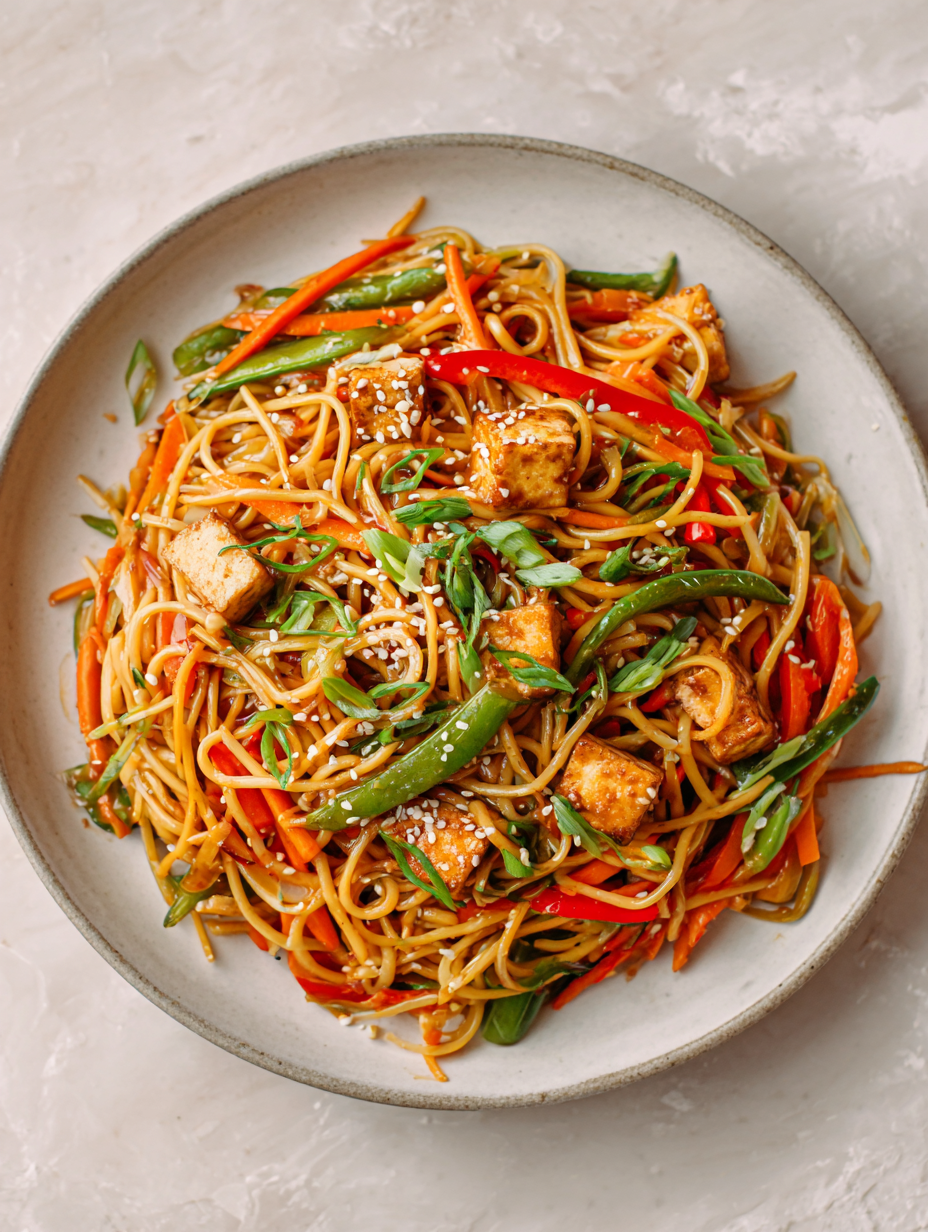
Vegan Chow Mein
Ingredients
Equipment
Method
- Bring a large pot of water to a boil, then add the noodles and cook until just al dente, about 2-3 minutes. Drain and rinse with cold water, then toss with a teaspoon of sesame oil to prevent sticking.
- While the noodles cook, prepare your vegetables: thinly slice the bell peppers and shred or thinly slice the carrots. Roughly chop the bok choy or cabbage. Mince the garlic and grate the ginger.
- Heat your wok or deep skillet over high heat until shimmering. Add two tablespoons of cooking oil and swirl to coat the pan. Once hot, add minced garlic and grated ginger, cooking for about 30 seconds until fragrant and slightly golden.
- Add the sliced bell peppers and carrots to the wok, stir-frying for 2-3 minutes until they start to soften and develop a slight char around the edges. Then, toss in the chopped greens and cook for another minute until wilted and vibrant.
- In a small bowl, whisk together soy sauce, rice vinegar, and maple syrup or sugar to create your stir-fry sauce. Pour this mixture into the wok, tossing everything quickly to coat all ingredients evenly. The sauce should sizzle and thicken slightly.
- Add the drained noodles to the wok, using tongs to toss and combine with the vegetables and sauce. Continue tossing for 1-2 minutes until everything is heated through, glossy, and well coated.
- Remove from heat, then drizzle with toasted sesame oil. Garnish with chopped green onions and sprinkle with toasted sesame seeds if using. Give everything one last toss to distribute the toppings evenly.
- Serve immediately while hot, fragrant, and vibrant, with a slight char on the vegetables and a glossy coating on the noodles. Enjoy your quick, satisfying vegan chow mein!
Pro tips for perfect vegan chow mein
- Use high heat to sear the veggies quickly, locking in their crunch and color.
- Toss the noodles in the pan just before adding sauce to absorb maximum flavor and prevent sticking.
- Keep garlic and ginger aromatics fragrant by stirring constantly and removing from heat once fragrant.
- For extra smoky flavor, briefly char the veggies over high heat until slightly blackened around the edges.
- Use tongs instead of a spoon for tossing ingredients—this prevents breakage and evenly coats everything.
- Finish with a drizzle of sesame oil off heat—its aroma will intensify, adding depth and nuttiness.
- Cook noodles just until al dente; overcooked noodles become mushy and fall apart quickly.
Common mistakes and how to fix them
- FORGOT to dry noodles → They stick together; rinse and toss with oil to prevent clumping.
- DUMPED sauce too early → Wait until everything is sizzling and veggies are crisp-tender.
- OVER-TORCHED garlic → Reduce heat or stir constantly; burnt garlic turns bitter quickly.
- MISSED to taste seasoning → Adjust soy or salt after cooking; flavors intensify as it rests briefly.
Quick fixes and pantry swaps
- If noodles stick, splash hot water and toss gently to loosen.
- When sauce is too thick, add a splash of water or broth and stir.
- Patch burnt garlic by removing it quickly and adding fresh garlic.
- Shield over-torched veggies with a lid, then resume cooking at lower heat.
- Splash soy sauce as a quick rescue for bland flavors; smell the umami bloom.
Prep, store, and reheat tips
- Cook the noodles ahead: Boil and rinse until just al dente, then toss with a little sesame oil to prevent sticking. Store in an airtight container for up to 2 days—reheat until steaming hot.
- Chop vegetables in advance: Slice peppers, carrots, and greens the night before. Keep in separate containers in the fridge for up to 24 hours; they’ll stay crisp if stored properly.
- Make the sauce early: Mix soy, vinegar, sweetener, and spices. Keep in a jar in the fridge for up to 3 days—give it a shake before use for fresh flavor.
- Reheating tips: Warm in a hot pan or wok, adding a splash of water or oil. Expect the noodles to soften and the veggies to lose some crunch—stir frequently and taste for seasoning adjustments. The aroma of garlic and soy will rekindle quickly, making it feel almost like freshly made.
Frequently Asked Questions
1. Can I use dried noodles instead of fresh?
Use firm, fresh noodles for the best chewy texture. Soak dried noodles until pliable, then drain well before stir-frying.
2. What can I substitute for soy sauce?
Coconut aminos are a milder, slightly sweeter alternative to soy sauce, perfect for a less salty flavor.
3. How do I get crispy vegetables without burning them?
Stir-fry vegetables on high heat until just tender and slightly charred for maximum flavor and crunch.
4. When should I add garlic and ginger?
Add garlic and ginger at the start of stir-frying, just until fragrant—about 30 seconds—to avoid bitterness.
5. How do I reheat chow mein without it drying out?
Reheat in a hot skillet, adding a splash of water or oil to revive moisture and flavor, about 1-2 minutes.
6. What equipment do I need for best results?
Use a wok or large skillet for quick, even heat distribution, ensuring ingredients cook rapidly and evenly.
7. How can I customize the sauce to my taste?
Adjust the sauce to taste—add more soy or a touch of sweetness if it feels too sharp or bland during cooking.
8. Why are my noodles mushy or overcooked?
Keep the noodles slightly underdone when boiling; they will finish cooking quickly in the wok and stay chewy.
9. How do I add final flavor touches?
Finish with a drizzle of toasted sesame oil and fresh scallions for added aroma and freshness just before serving.
10. Can I customize the vegetables in this recipe?
Yes, you can swap out vegetables based on what’s in your fridge—just slice thin for quick stir-frying.
Making this vegan chow mein is like reclaiming a favorite takeout dish, but with control over every ingredient. The smells of garlic and toasted sesame fill my kitchen, and the textures—crisp vegetables and chewy noodles—bring back memories of casual nights out. It’s honest, satisfying, and adaptable for whatever’s in the fridge.
Honestly, I keep coming back to this recipe because it’s quick, forgiving, and deeply comforting. There’s a quiet satisfaction in tweaking the sauce or swapping vegetables and still ending up with something that feels just right. It’s a reminder that good food doesn’t have to be complicated, especially when it’s made with a little love and a lot of flavor.