
There’s something about creamy tomato pasta that feels like a warm blanket, especially when you’re craving comfort without the dairy. I grew up loving that velvety sauce clinging to al dente noodles, but I knew I wanted to make it entirely plant-based—no compromise on richness or flavor. This version uses everyday pantry staples, yet it hits all those nostalgic notes with a slightly modern twist.
What’s funny is how a simple swap—cashew cream instead of cheese—can transform the dish into something that feels indulgent but still light. I love that this recipe can be whipped up in under 30 minutes, perfect for busy nights or whenever you need a quick, cozy meal. It’s honest, unpolished, and deeply satisfying, just like the best childhood memories wrapped in a bowl.
Focusing on the comfort of a childhood favorite, but making it entirely plant-based and emphasizing the rich, cheesy feel without dairy.
Story behind this dish
- This recipe started from a lazy Sunday afternoon craving. I wanted something rich and comforting but without the usual dairy load. The idea of blending roasted tomatoes with soaked cashews clicked instantly—it’s like capturing summer’s sweetness in a creamy, tangy sauce. I’ve always loved how simple ingredients can surprise you with their versatility, especially when you’re not in the mood for anything fancy.
- I remember making this for a friend who’s vegan and was missing that creamy pasta fix. The look on their face when they took the first bite—like they’d found a secret—made me realize just how much flavor you can pack into humble pantry staples. It’s become a go-to when I need something quick, honest, and satisfying. No fuss, no pretenses, just good, honest food that feels like a little celebration.
- heading
- Story behind this dish
Key Ingredients Breakdown
- Canned crushed tomatoes: I love the bright, slightly tangy flavor they bring, like a burst of summer sun. If you want a richer taste, try fire-roasted ones for a smoky edge.
- Cashews: They turn into that velvety, cheesy sauce base when soaked and blended. If you’re allergic, coconut cream can be a quick swap, though it adds a subtle sweetness.
- Garlic: It’s my secret weapon—roasted until fragrant or fresh for a punch. Skip or adjust based on your garlic love; it’s all about that aromatic kick.
- Nutritional yeast: Adds a cheesy, umami depth that’s hard to beat. If you’re out, a pinch of miso paste can mimic that savory complexity.
- Olive oil: I use a good splash to sauté and add richness. If you’re avoiding oil, a little water or broth works, but the sauce might be less lush.
- Salt & pepper: Essential for balancing all the flavors. Go slow and taste—sometimes a pinch of flaky sea salt makes a big difference.
- Pasta: I prefer a hearty shape like rigatoni or penne for holding sauce, but spaghetti works too. Cook until just al dente—don’t overdo it, or it’ll turn to mush.
Spotlight on key ingredients
Canned crushed tomatoes:
- I love how their bright, tangy flavor bursts with each bite. For a smoky twist, try fire-roasted ones.
- Cashews: They transform into a velvety, cheesy sauce when soaked and blended. If allergic, coconut cream offers a quick, gentle alternative, adding subtle sweetness.
Nutritional yeast:
- Its cheesy, umami depth is essential. If you run out, a small spoonful of miso paste can mimic that savory richness and add a subtle complexity.
- Garlic: It’s the aromatic backbone—roasted for sweetness or fresh for punch. Its behavior depends on your mood; it’s all about that fragrant aroma filling the kitchen.
Notes for ingredient swaps
- Dairy-Free: Use coconut cream or cashew cream for richness. Coconut adds a subtle sweetness, while cashew keeps it neutral and creamy.
- Tomatoes: Swap in fire-roasted or sun-dried tomatoes for a smoky, intense flavor that deepens the sauce.
- Pasta: Whole wheat or gluten-free options work well. Adjust cooking time as needed; they may take a minute longer or less.
- Garlic: Roasted garlic offers a milder, sweeter note, perfect if you prefer less punch or want a softer garlic flavor.
- Nutritional Yeast: Miso paste can mimic that cheesy umami if you’re out. Use a small amount—start with 1 teaspoon and taste.
- Oil: If avoiding oil, sauté garlic in a splash of vegetable broth or water. The sauce will be slightly lighter but still flavorful.
- Herbs: Fresh basil, oregano, or thyme can replace or supplement dried herbs. Add at the end for maximum aroma and freshness.
Equipment & Tools
- Large skillet: To cook and simmer the sauce
- Blender: To create a smooth, creamy sauce base
- Measuring cups and spoons: For accurate ingredient portions
- Wooden spoon: To stir and combine ingredients
- Pot for boiling pasta: To cook the pasta to al dente
Step-by-step guide to creamy tomato pasta
- Gather your equipment: a large skillet, blender, measuring cups, and a wooden spoon. Preheat the skillet over medium heat (about 160°C/320°F).
- In the blender, combine 1 cup of soaked cashews (soak for at least 4 hours or boil for 10 minutes), 1 can (400g) of crushed tomatoes, 2 cloves of garlic, 2 tablespoons of olive oil, 2 tablespoons of nutritional yeast, and a pinch of salt. Blend until smooth and creamy. Set aside.
- Heat the skillet with a splash of olive oil. Add 2 minced garlic cloves—sauté until fragrant, about 30 seconds. Do not let it brown or it will turn bitter.
- Pour the blended sauce into the skillet. Bring to a gentle simmer—crackles should be steady, and the sauce will thicken slightly after 3-5 minutes. Stir often to prevent sticking.
- Meanwhile, cook 250g of your favorite pasta in boiling salted water (about 2 liters, 100°C/212°F) until just al dente, about 8-10 minutes. Drain, reserving a cup of pasta water.
- Taste the sauce. If it’s too thick, add a splash of pasta water to loosen. Adjust seasoning with a pinch more salt or pepper if needed.
- Add the cooked pasta directly into the sauce. Toss gently to coat every strand. Cook together for another minute, watching the sauce cling beautifully to the noodles.
- Remove from heat. Let sit for 1-2 minutes to allow flavors to meld. If the sauce thickens too much, stir in a little more pasta water or a splash of olive oil.
- Serve hot, garnished with fresh basil or a sprinkle of nutritional yeast if desired. Plate immediately for the best creamy texture and vibrant flavor.
Toss the pasta with the sauce in the skillet. Let sit for a minute to meld flavors. Serve immediately with fresh herbs or extra nutritional yeast for garnish.
How to Know It’s Done
- The sauce should be velvety and coat the pasta evenly, with a slightly oozy texture.
- Pasta should be al dente—firm to the bite but cooked through without falling apart.
- The sauce’s color should be a rich, bright red with a fragrant garlic aroma.
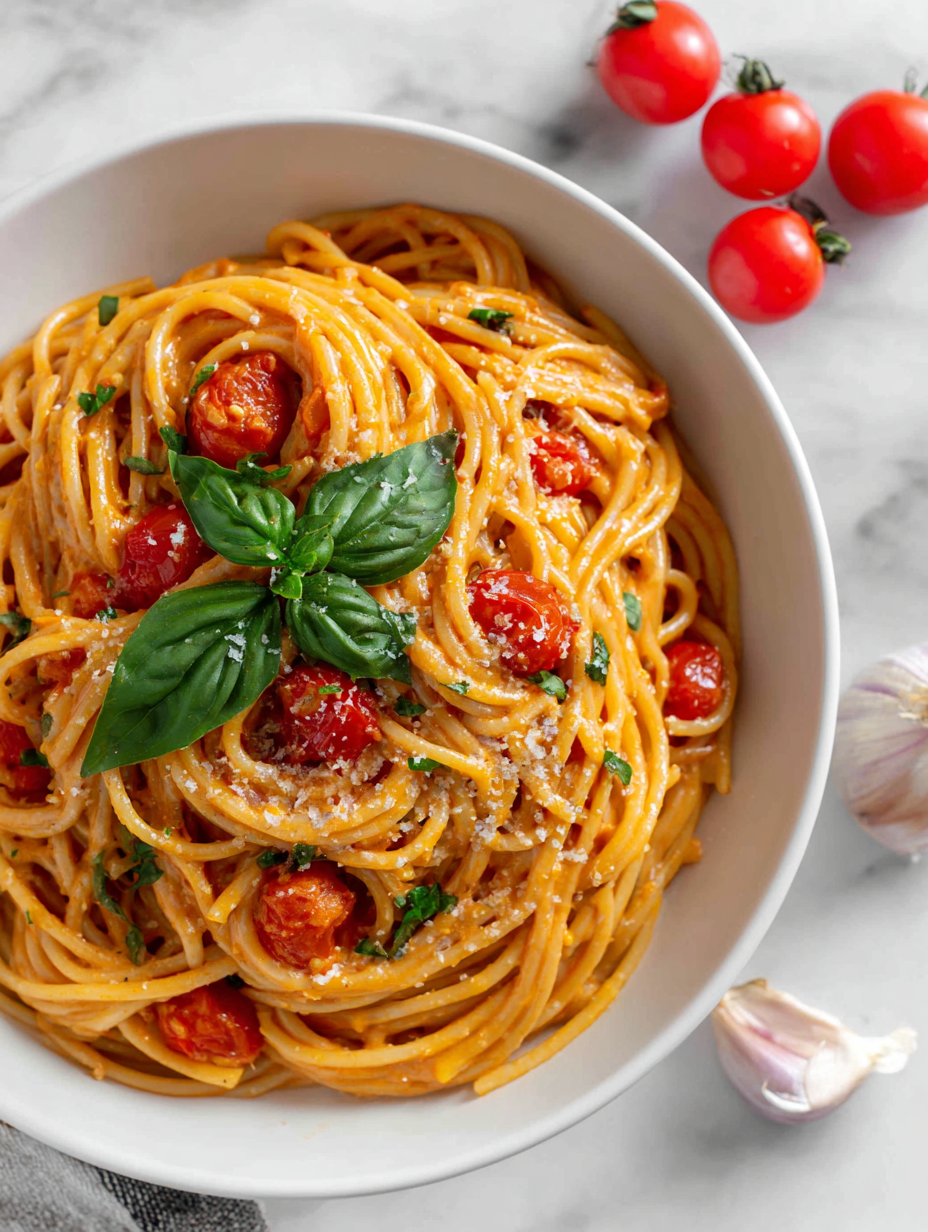
Vegan Creamy Tomato Pasta
Ingredients
Equipment
Method
- Start by blending the soaked cashews, crushed tomatoes, minced garlic, olive oil, nutritional yeast, and a pinch of salt until the mixture is completely smooth and silky. Set the sauce aside.
- Bring a large pot of salted water to a boil and cook your pasta until just al dente, about 8-10 minutes. Drain and set aside.
- Pour the blended sauce into a large skillet and warm over medium heat. Let it bubble gently for about 3-5 minutes, stirring occasionally, until it thickens slightly and releases a fragrant aroma.
- Add the cooked pasta directly into the skillet with the sauce. Toss gently with a wooden spoon to coat all the noodles evenly, allowing the sauce to cling to each strand.
- Once the pasta is well coated and heated through, remove the skillet from the heat. Let it sit for a minute to allow the flavors to meld beautifully.
- Serve the creamy tomato pasta hot, garnished with fresh herbs or an extra sprinkle of nutritional yeast if desired. Enjoy the velvety, vibrant dish that’s rich, satisfying, and completely plant-based!
Pro tips for perfect creamy pasta
- Use a high-speed blender to achieve a truly silky, velvety sauce—no lumps allowed.
- Sauté garlic gently over medium heat until fragrant—avoid browning to keep sweetness and avoid bitterness.
- When simmering the sauce, keep it at a gentle bubble—steady crackles signal it’s just right, not boiling over.
- Reserve a splash of pasta water before draining—use it to loosen the sauce if it thickens too much or clings too tightly.
- Taste and adjust seasoning after combining pasta and sauce—sometimes a pinch more salt or a squeeze of lemon brightens everything.
- Toss the pasta in the sauce off the heat—this helps the flavors meld without the sauce breaking or separating.
- For an extra touch, sprinkle fresh basil or nutritional yeast just before serving—adds aroma and a cheesy depth.
Common mistakes and how to fix them
- FORGOT to taste before serving → Always taste and adjust seasoning at the end.
- DUMPED pasta water too early → Save some water to loosen the sauce if needed.
- OVER-TORCHED garlic → Sauté garlic over medium heat until fragrant, not browned.
- MISSED blending enough → Ensure cashews are thoroughly blended until completely smooth.
Quick fixes and pantry swaps
- When sauce looks separated, splash in more pasta water to restore creaminess.
- If sauce is too thick, shake in a quick drizzle of olive oil for shimmer and smoothness.
- Splash extra lemon or vinegar if the tomato flavor feels dull or flat.
- Patch over-salted sauce with a little more blended cashew or tomato to balance flavors.
- Shield burnt garlic by removing the pan from heat immediately and starting fresh with new garlic.
Make-Ahead and Storage Tips
- Prepare the sauce: blend cashews, tomatoes, garlic, and seasonings up to a day in advance. Keep chilled; the flavors deepen overnight.
- Cook the pasta ahead and toss with a little olive oil to prevent sticking. Store in an airtight container for up to 24 hours in the fridge.
- Refrigerate leftovers in a sealed container for up to 3 days. The sauce may thicken; stir in a splash of water or plant-based milk to loosen before reheating.
- Reheat gently on the stove over low heat, stirring often. The sauce will be velvety, with a rich aroma, ready in about 5 minutes.
- Note: The flavors might mellow slightly after storage, but a quick splash of lemon juice or fresh herbs before serving re-brightens the dish.
Top questions about vegan creamy tomato pasta
1. How do I choose the best canned tomatoes?
Look for bright, tangy canned tomatoes with no mold or bulging lids. They should smell fresh and tomato-y.
2. Can I use different nuts instead of cashews?
Soak cashews in hot water for at least 10 minutes or overnight to get that smooth, velvety texture.
3. How do I fix a bland sauce?
Taste the sauce before mixing with pasta; adjust salt or add a splash of lemon for brightness.
4. Does the type of olive oil matter?
Use a good-quality olive oil for richness and a fragrant aroma that enhances the sauce’s depth.
5. How do I tell when the pasta is done?
Cook pasta just until al dente—firm but not hard. Overcooked pasta turns mushy quickly.
6. What if my sauce is grainy?
Blend the sauce until completely smooth—lumps will give a gritty texture instead of velvety cream.
7. How can I loosen the sauce if it gets too thick?
Add a splash of pasta water if the sauce thickens or clings too tightly to noodles.
8. How do I reheat leftovers without ruining the texture?
Reheat gently on the stove over low heat, stirring often to keep the sauce creamy and prevent sticking.
9. Can I add other herbs or toppings?
Fresh basil or nutritional yeast added just before serving boosts aroma and cheesy flavor.
10. How long can I keep leftovers?
Storing in an airtight container in the fridge for up to 3 days works well; reheat gently for best results.
This dish feels like a small rebellion against the usual. It’s honest, not overly polished, and packed with flavors that remind you of lazy summer afternoons. Sometimes, it’s those simple, imperfect meals that stick with you the longest.
Making this pasta is a messy, cozy act—lifting the lid on pantry staples and turning them into something familiar and new all at once. It’s not just about the food, but the quiet joy of creating something honest with your own hands, right in the middle of a busy week.