
Making vegan jambalaya isn’t about replicating the exact meatiness of the original; it’s about capturing that smoky, layered depth using what’s in your pantry. I’ve found that a good splash of smoked paprika and a dash of liquid smoke go a long way to mimic that Cajun warmth without needing any special ingredients. It’s honestly a kitchen experiment I keep coming back to, especially when I want comfort food that feels indulgent but still plant-based.
This dish is a bit chaotic—like the best Cajun cooking—full of bold spices and tender rice. I love how it comes together quickly, and the smell alone makes the house feel like a Mardi Gras parade. It’s my go-to for a weeknight dinner that feels like a celebration, no matter where I am or what I have in the fridge. Plus, it’s flexible enough to toss in whatever veggies or beans I’ve got lying around, which makes it feel less like a recipe and more like a little kitchen magic.
Focusing on how to make vegan jambalaya that mimics the smoky complexity of traditional Cajun cooking using everyday kitchen staples, without relying on store-bought seasonings or specialty ingredients.
Smoky secrets of Cajun flavor
- I remember the first time I achieved that smoky, spicy aroma that reminded me of roadside Cajun joints—felt like a small victory.
- Cooking this dish always takes me back to family gatherings in Louisiana, where the air is thick with spice and stories.
- There’s a weird joy in tweaking the heat and spice levels until it hits just right, making each pot uniquely mine.
- Every time I make this, I feel a little more connected to my roots, even if I’m miles away from the bayou.
The story behind this recipe
- This recipe came together on a rainy Sunday afternoon, when I was craving something hearty yet simple, and I realized I had all the flavors of Cajun seasoning but no meat. It’s funny how a rainy day can spark the most satisfying kitchen experiments. I started tossing in whatever vegetables I had—bell peppers, celery, a can of kidney beans—and it just clicked. That smoky, spicy aroma filling the kitchen made me think, why not make this a regular thing, vegan or not?
- Cooking this dish feels like a little act of rebellion against the usual heavy, meat-laden jambalaya. It’s a reminder that flavor and comfort don’t need to come from animal products. Plus, I love how adaptable it is—whatever’s in the fridge can go in, and it still tastes like a celebration. It’s become my go-to for busy weeknights when I want something fulfilling but quick, and honestly, the smell alone makes everyone smile.
- heading: ‘Inspiration from a rainy day’
Historical and Cultural Roots
- Vegan jambalaya evolved from the traditional Cajun dish, adapting its bold, smoky flavors for plant-based eaters in the late 20th century.
- The dish’s roots stretch back to Louisiana’s Creole and Cajun communities, where rice, spices, and smoked meats defined comfort food.
- Modern vegan versions often use smoked paprika and liquid smoke to mimic the depth of smoked sausage without animal products.
- This recipe reflects a broader movement towards plant-based comfort foods that honor regional flavors while being accessible to all diets.
Ingredient breakdown
- Bell peppers: I love the sweet, smoky aroma they release when sautéed; feel free to add more for sweetness or skip if you prefer milder flavors.
- Celery: Its crisp texture and subtle earthiness build the dish’s backbone; chop finely so it melds seamlessly into the spices.
- Smoked paprika: This is my secret weapon for that deep, smoky hue and flavor—don’t skimp, but if you’re sensitive, start with half and taste.
- Tomatoes: I prefer crushed canned ones for their oozy richness; fresh can work too, just add a splash of water if they seem dry during cooking.
- Kidney beans: They soak up all the smoky goodness; if you want a creamier texture, mash a few before adding, or try lentils if beans aren’t your thing.
- Rice: Long-grain is my go-to for fluffy, separate grains; rinse well to remove excess starch and prevent clumping.
- Liquid smoke: Just a dash adds that nostalgic, smoky punch—be conservative until you get a feel for it; it’s potent stuff.
Spotlight on key ingredients
Bell peppers:
- Their sweet, smoky aroma intensifies as they cook; feel free to add more for sweetness or skip if you prefer milder flavors.
- Tomatoes: Their oozy richness creates a vibrant foundation; crushed canned ones release a burst of tang and depth during simmering.
Kidney beans:
- Smoked paprika: My secret for that deep, smoky hue and flavor—don’t skimp, but start with half if you’re sensitive, then taste and adjust.
- They soak up all the smoky goodness and add hearty texture; mashing a few before adding can boost creaminess if desired.
Notes for ingredient swaps
- Oil: I prefer avocado oil for its neutral flavor and high smoke point; you can swap with coconut or olive oil, but watch the flavor impact.
- Smoked paprika: If you don’t have it, use regular paprika plus a dash of cumin or a tiny splash of liquid smoke for smoky depth.
- Vegetables: Carrots or zucchini can replace bell peppers; they’ll add different textures but still bring color and sweetness.
- Beans: Black beans or chickpeas will work instead of kidney beans, each bringing a unique texture and flavor—try what you have.
- Broth: Use vegetable bouillon cubes or powder if you’re out of broth; it’s a quick way to boost flavor without extra liquid.
- Rice: Quinoa or cauliflower rice can be used for gluten-free or lighter versions, but they’ll change the texture and cooking time.
- Liquid smoke: If you’re sensitive or out, a few drops of chipotle in adobo or smoked salt can mimic that smoky punch.
Equipment & Tools
- Large heavy-bottomed pot: To evenly cook the rice and vegetables without burning.
- Wooden spoon: For stirring and sautéing ingredients gently.
- Sharp knife: To chop vegetables uniformly and efficiently.
- Chopping board: To prep vegetables in a clean, stable surface.
Step-by-step guide to vegan jambalaya
- Gather your equipment: a large heavy-bottomed pot, a wooden spoon, a sharp knife, and a chopping board. Preheat the pot over medium heat to about 180°C (356°F).
- Start with the aromatics: dice one onion, two celery stalks, and one red bell pepper. Sauté in a splash of oil for 5 minutes until fragrant and slightly softened. Stir occasionally and listen for a gentle crackle.
- Add spices: 1 teaspoon smoked paprika, 1/2 teaspoon cayenne, 1 teaspoon dried thyme, and a pinch of salt. Cook for 1-2 minutes until the spices are toasted and aromatic, filling the air with a smoky scent.
- Stir in the tomatoes: about 1 cup crushed canned tomatoes or fresh chopped. Cook for another 3 minutes until the mixture darkens slightly and smells rich.
- Add the rice: 1 1/2 cups long-grain rice. Stir well, coating the grains with the spice mixture. Pour in 3 cups vegetable broth and bring to a boil. Reduce heat to low, cover with a tight-fitting lid, and simmer for 15 minutes.
- In the meantime, rinse 1 can of kidney beans and set aside. Chop any additional vegetables or vegan sausage if using. After 15 minutes, check if the rice is tender and the liquid is absorbed.
- Stir in the beans and any extras. Cover again and cook for another 5 minutes, allowing flavors to meld. The rice should be fluffy, with a slight smoky hue, and the beans heated through.
- Remove from heat: let sit, covered, for 5 minutes to allow the flavors to settle. Fluff the rice with a fork. Taste and adjust seasoning if needed—more salt, a dash of liquid smoke, or extra spice.
- Serve hot: plate the jambalaya in bowls, garnished with chopped green onions if desired. The rice should be tender, with a smoky aroma and a slightly spicy, oozy sauce coating each grain.
Let the jambalaya rest, covered, for 5 minutes after cooking. Then, fluff with a fork, taste for seasoning, and serve straight from the pot or in bowls. Garnish with fresh herbs if desired.
How to Know It’s Done
- Rice is fluffy and separate, with a smoky hue.
- Vegetables are tender and aromatic, not mushy.
- Broth is mostly absorbed, leaving a moist but not soupy dish.
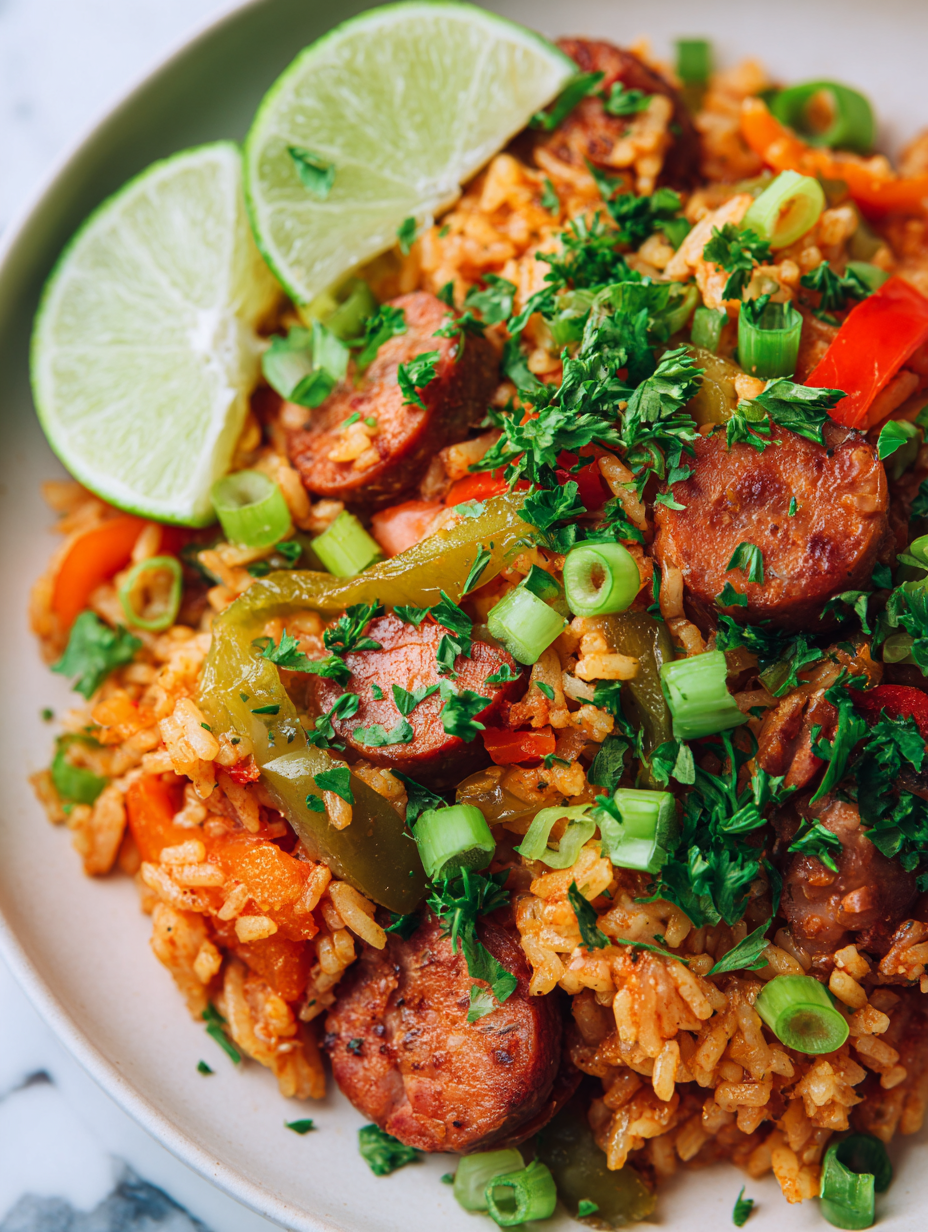
Vegan Cajun Jambalaya
Ingredients
Equipment
Method
- Begin by gathering your equipment: a large heavy-bottomed pot, a wooden spoon, a sharp knife, and a chopping board. Preheat the pot over medium heat.
- Dice the onion, celery, and bell pepper into small, uniform pieces. Add a splash of oil to the hot pot, then sauté the vegetables for about 5 minutes, stirring occasionally, until they become fragrant and start to soften with edges turning slightly golden.
- Add the smoked paprika, cayenne pepper, and dried thyme to the vegetables. Cook for 1-2 minutes until the spices release their aroma, filling the kitchen with a smoky scent.
- Stir in the crushed canned tomatoes and cook for another 3 minutes, allowing the mixture to darken slightly and develop a richer aroma.
- Pour in the rinsed rice, stirring to coat each grain with the spicy tomato mixture. This helps the rice absorb flavors and prevents clumping.
- Add the vegetable broth and bring the mixture to a boil. Once bubbling, reduce the heat to low, cover the pot tightly, and let simmer for 15 minutes. During this time, the rice will absorb the flavorful liquid and become tender.
- In the meantime, rinse the kidney beans and set them aside. After the rice has cooked, gently fold in the beans, then cover and cook for an additional 5 minutes to let the flavors meld and the beans heat through.
- Remove the pot from heat and let the jambalaya rest, covered, for 5 minutes. This allows the flavors to settle and the rice to finish steaming to perfection.
- Fluff the rice with a fork to separate the grains and distribute the smoky spices evenly. Taste and adjust seasoning if needed, adding a few drops of liquid smoke for extra smoky depth.
- Serve your vibrant, smoky vegan jambalaya hot, garnished with chopped green onions if desired. Enjoy the hearty, flavorful dish that captures the spirit of Cajun cooking in every bite!
Pro tips for vegan jambalaya
- Bolded mini-head: Sauté aromatics until fragrant and slightly caramelized, about 5 minutes, to build a smoky base.
- Bolded mini-head: Toast spices like paprika and thyme for 1-2 minutes to unlock deep, layered flavors.
- Bolded mini-head: Rinse rice thoroughly to prevent clumping and ensure fluffy, separate grains after cooking.
- Bolded mini-head: Gradually add broth and watch for absorption to avoid soggy rice—adjust heat as needed.
- Bolded mini-head: Rest the pot off heat for 5 minutes after simmering, letting flavors settle and rice finish steaming.
- Bolded mini-head: Use crushed tomatoes for oozy richness; if fresh, add a splash of water to mimic canned texture.
- Bolded mini-head: Finish with a quick taste test—adjust seasoning with salt, smoked paprika, or a dash of liquid smoke for peak flavor.
Common mistakes and how to fix them
- FORGOT to taste and adjust seasoning before serving. Always taste for balance and spice levels.
- DUMPED too much liquid at once. Add broth gradually, watching rice absorption and adjusting heat.
- OVER-TORCHED the rice. Reduce heat early if you see dark spots or smell burnt; stir gently.
- MISSED the resting step. Let the jambalaya sit for 5 minutes for flavors to meld and rice to settle.
Quick fixes for common issues
- When sauce is too thin, splash in a bit of tomato paste and simmer for 5 more minutes.
- If rice is undercooked, add a splash of hot broth, cover, and cook on low for 3-5 minutes.
- Splash some water on burning bits and gently scrape to lift flavor without sticking.
- Patch bland flavor with a pinch more smoked paprika or a dash of liquid smoke for smoky depth.
- Shield overcooked beans with a quick stir and a sprinkle of fresh herbs to revive their texture.
Prep, store, and reheat tips
- Prep all vegetables—dice peppers, celery, and onions—up to one day in advance; store in an airtight container in the fridge for freshness.
- Cook the rice ahead of time and keep it in a sealed container in the fridge for up to 24 hours; reheat gently to avoid mushiness.
- The jambalaya flavors deepen overnight; store leftovers in an airtight container for 2-3 days, allowing the smoky aroma to mellow and intensify.
- Reheat slowly on the stovetop over low heat, stirring occasionally, until steaming hot and fragrant—about 10 minutes; add a splash of broth if it thickens too much.
- For freezer storage, portion into freezer-safe containers; it keeps well for up to a month. Thaw in the fridge overnight and reheat thoroughly, checking for even warmth and aroma.
Top questions about vegan jambalaya
1. How do I achieve authentic smoky flavor?
Smoked paprika and liquid smoke are key to mimicking that smoky Cajun flavor—use sparingly and taste as you go.
2. What type of rice works best?
Use long-grain rice for fluffiness; rinse before cooking to prevent clumping and ensure each grain stays separate.
3. Can I skip the beans?
Adding beans like kidney or black beans gives the dish hearty texture, soaking up flavors and adding richness.
4. Can I customize the vegetables?
Vegetables like bell peppers, celery, and tomatoes are essential for flavor and color—feel free to swap with zucchini or carrots.
5. How do I know when it’s done?
Cook on low heat after adding broth, keep the lid on, and wait until the liquid is absorbed for fluffy rice.
6. How long does it keep?
Store leftovers in an airtight container in the fridge for up to 3 days; reheat slowly on the stovetop to preserve texture.
7. Can I prepare it ahead of time?
For a quicker prep, dice all vegetables in advance and cook the rice ahead, then combine and reheat when needed.
8. What if it’s too spicy?
If the dish is too spicy, add a touch of coconut milk or a squeeze of lemon to balance the heat.
9. Can I use water instead of broth?
Use vegetable broth instead of water for more depth; a splash of soy sauce or miso can also boost umami.
10. How do I fix bland flavor?
Always taste and adjust seasoning before serving—add more smoked paprika or a dash of liquid smoke for extra smoky flavor.
Making this vegan jambalaya feels like a quiet rebellion, turning smoky, spicy flavors into something completely plant-based. It’s a dish that invites curiosity and comfort, especially when the house fills with that irresistible aroma. No matter where I am, it reminds me that bold flavors don’t need meat to feel celebratory.
Whenever I plate up this dish, I think about how simple ingredients can come together to create something deeply satisfying. It’s a reminder to keep experimenting—sometimes the best meals are born from a little kitchen chaos, a pinch of patience, and a whole lot of taste.