
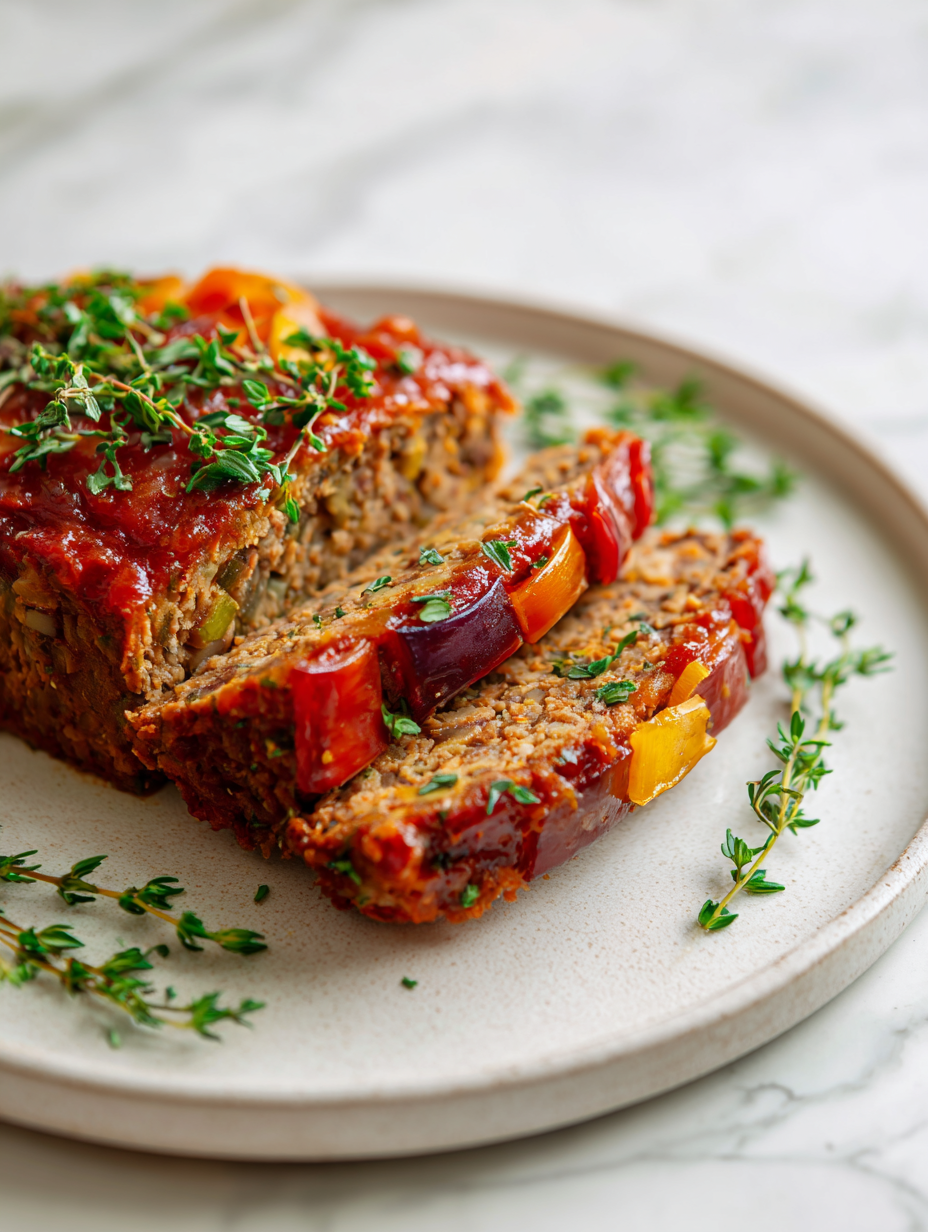
This vegan meatloaf is my way of reclaiming a childhood favorite, but with a plant-based twist that surprises. It’s all about that first crack of the crust, the smell of caramelized onions, and the hearty, savory bite that feels like a warm hug. I’ve tweaked the spices and textures so it’s not just a copy, but something vibrant and satisfying in its own right.
Making this dish feels like a small act of rebellion—replacing familiar, comfort-food classics with something kinder to the planet and packed with fresh, honest flavors. It’s perfect for those evenings when you crave nostalgia but want to keep it light and mindful. Plus, it’s a great way to sneak in some veggies without anyone noticing.
Focusing on the nostalgic comfort of classic meatloaf, but reinvented with vibrant spices and textured plant-based ingredients that mimic the familiar, comforting bite.
Rediscovering Comfort Food
- Cooking this reminds me of lazy Sunday afternoons with my grandma, the smell of onions filling the kitchen.
- I used to think vegan dishes lacked heart, but this meatloaf proves that comfort can be plant-based and still deeply satisfying.
- There’s a quiet pride in serving a dish that’s nourishing, familiar, and kinder to the planet all at once.
- This recipe has seen me through countless family dinners—each time, it’s met with quiet nods of approval.
The story behind this recipe
- This vegan meatloaf was born out of a late-night craving for the familiar, hearty comfort of old-school meatloaf, but with a plant-based twist that feels just as satisfying. I remember the first time I layered the textured soy and lentils, it was like rediscovering an old friend in a new light.
- The idea struck me during a busy week when I needed something nourishing and quick, but also nostalgic. I wanted that savory, caramelized onion smell filling the kitchen, the crust just starting to crackle, promising a warm, honest bite. It’s become a go-to for family dinners and potlucks, a dish that feels both familiar and fresh.
- heading:
Historical & Cultural Roots
- Vegan meatloaf recipes gained popularity in the 1970s as part of the rise of plant-based diets and health movements.
- This dish often echoes the 1950s American comfort food, adapted with a modern, cruelty-free twist that appeals to contemporary ethics.
- The use of textured vegetables and legumes in vegan meatloaf mirrors traditional meatloaf ingredients, but with a plant-powered evolution.
- Some culinary historians see vegan meatloaf as a symbol of the shift towards more sustainable, innovative cooking practices.
Key Ingredients Breakdown
- Lentils: I love using brown lentils—they hold shape well and add a hearty, earthy flavor. If you prefer a softer bite, try red lentils; just be mindful they cook faster and can turn mushy if overdone.
- Textured soy protein: This is my secret for that chewy, meat-like texture. Soak it in hot veggie broth first—it plumps up and becomes juicy, almost oozy, when cooked. Skip it if you’re avoiding soy, but you’ll lose some chew.
- Onions and garlic: The aroma of caramelized onions and garlic is what makes this dish feel nostalgic. Use plenty, and cook until deep golden—if you burn the garlic, start over; burnt garlic turns bitter quickly.
- Breadcrumbs: I prefer whole wheat for a nutty crunch, but gluten-free work fine too. Toast them lightly before mixing—adds a smoky edge and keeps the loaf from feeling too dense.
- Tomato paste: It’s my go-to for that tangy, umami punch. If you want extra brightness, add a splash of lemon juice after baking. Without it, the loaf can taste a bit flat and dull.
- Herbs and spices: I love thyme and smoked paprika—they add warmth and depth. If you’re sensitive to spice, start small; these flavors develop beautifully as it bakes, filling the kitchen with smoky, fragrant goodness.
- Vegetables: Carrots and celery add crunch and color. Finely dice them so they blend into the loaf seamlessly. If you prefer a chunkier texture, just cut bigger pieces—either way, they’ll add a fresh, vegetal note.
Spotlight on key ingredients
Lentils:
- I love using brown lentils—they hold shape well and add a hearty, earthy flavor. If you prefer a softer bite, try red lentils; just be mindful they cook faster and can turn mushy if overdone.
- Textured soy protein: This is my secret for that chewy, meat-like texture. Soak it in hot veggie broth first—it plumps up and becomes juicy, almost oozy, when cooked. Skip it if you’re avoiding soy, but you’ll lose some chew.
- Onions and garlic: The aroma of caramelized onions and garlic is what makes this dish feel nostalgic. Use plenty, and cook until deep golden—if you burn the garlic, start over; burnt garlic turns bitter quickly.
Textured soy protein:
- It’s my go-to for that chewy, fibrous bite. It soaks up flavors and adds a juicy, satisfying chew. If soy’s an issue, shredded jackfruit can mimic the fibrous texture, but it’s not as meaty.
- Herbs and spices: Thyme and smoked paprika are my staples—they add warmth and depth. If you’re cautious about spice, start small; they develop into a smoky, fragrant aroma as it bakes.
Notes for ingredient swaps
- Protein Base: Brown lentils are my go-to for a hearty, earthy bite, but red lentils cook faster and add a softer texture—perfect if you want a more tender loaf.
- Texture: Textured soy protein gives that chewy, meat-like feel. If soy isn’t your thing, try jackfruit for a fibrous, shredded vibe, though it won’t mimic the chew exactly.
- Flavor Boosters: Tomato paste adds a tangy depth. For a brighter note, swap with a splash of lemon juice or vinegar—just be mindful of the acidity.
- Breadcrumbs: Whole wheat add nuttiness and structure, but gluten-free oats work just as well, lending a slightly chewier bite and a rustic flavor.
- Herbs & Spices: Smoked paprika and thyme bring warmth. If you prefer milder flavors, cut back or skip the smoked paprika—your loaf will taste more straightforward but still tasty.
- Vegetables: Carrots and celery add crunch and sweetness. Finely dice for a seamless mix or chop bigger for more texture—either way, they’ll brighten the loaf’s flavor.
- Oil & Fats: Use olive oil for a rich, fruity note. If you want a lighter option, swap with avocado oil or a neutral oil; your loaf will still bake up moist and tender.
Equipment & Tools
- Loaf pan: Shapes and contains the meatloaf during baking.
- Skillet: Sautés onions and garlic for flavor.
- Food processor: Combines ingredients to desired texture.
- Spatula: Transfers and smooths mixture into pan.
- Wire rack: Cools and sets the loaf after baking.
Step-by-step guide to vegan meatloaf
- Preheat your oven to 180°C (350°F). Find a standard 9×5 inch loaf pan and give it a light spray with cooking oil—this helps with the crust.
- In a large skillet over medium heat (about 160°C/320°F), sauté 1 finely chopped onion and 2 minced garlic cloves in a splash of oil until golden and fragrant, about 8 minutes. Set aside to cool slightly.
- While the onions cook, soak 1 cup textured soy protein in hot vegetable broth for 10 minutes until plump. Drain excess liquid, then press lightly to remove extra moisture.
- In a food processor, pulse 1 cup cooked lentils, the soaked soy, and the sautéed onion mixture until combined but not completely smooth—leave some texture. It should be sticky but scoopable.
- Transfer the mixture to a large bowl. Stir in 1/2 cup whole wheat breadcrumbs, 2 tablespoons tomato paste, 1 teaspoon smoked paprika, 1 teaspoon dried thyme, and salt & pepper to taste. Mix well until evenly combined.
- Press the mixture firmly into the prepared loaf pan, smoothing the top with a spatula. Place in the middle rack of the oven and bake for 45-50 minutes. The top should turn a deep golden and the edges slightly crispy.
- Once baked, remove from oven and let rest in the pan for 10 minutes. This helps set the shape. Then, transfer to a wire rack or platter for slicing.
- For a glossy finish, brush the top with a little vegan ketchup or tomato glaze before serving. Slice when slightly cooled for cleaner cuts and better presentation.
Let the loaf rest for at least 10 minutes outside the oven to firm up. Slice carefully with a sharp knife, then serve with your favorite sides or gravy.
How to Know It’s Done
- Crust is deep golden and slightly crackling.
- Center probes to 74°C (165°F) for proper doneness.
- Loaf feels firm but yields slightly when pressed, not mushy.
Vegan Meatloaf
Ingredients
Equipment
Method
- Preheat your oven to 180°C (350°F). Lightly spray a standard loaf pan with cooking oil to prevent sticking.
- In a skillet over medium heat, warm the olive oil and sauté the finely chopped onion and diced celery until the onion becomes deeply golden and fragrant, about 8 minutes. This builds a sweet, caramelized flavor base.
- While the vegetables cook, soak the textured soy protein in hot vegetable broth for about 10 minutes until plump. Drain any excess liquid and gently press to remove moisture—this keeps the loaf from becoming soggy.
- In a food processor, combine the cooked lentils, soaked soy protein, sautéed onion and celery, and minced garlic. Pulse a few times until the mixture is combined but still has some texture—think slightly chunky but cohesive.
- Transfer the mixture to a large bowl. Stir in the toasted breadcrumbs, tomato paste, smoked paprika, thyme, and season with salt and pepper. Mix thoroughly until all ingredients are evenly incorporated.
- Press the mixture firmly into the prepared loaf pan, smoothing the top with a spatula to create an even surface. This helps the loaf bake uniformly and develop a nice crust.
- Bake in the preheated oven for 45-50 minutes, until the top is deep golden and slightly crackling at the edges. The smell of caramelized spices and onions will fill your kitchen.
- Remove the loaf from the oven and let it rest in the pan for about 10 minutes. Resting allows the loaf to set, making it easier to slice cleanly.
- Gently transfer the loaf onto a wire rack to cool slightly. Slice with a sharp knife, revealing a hearty, textured interior with a crispy crust.
- Serve slices warm or at room temperature, optionally glazed with vegan ketchup or a drizzle of your favorite sauce for added flavor. Enjoy this comforting, plant-based take on a classic.
Pro tips for perfect vegan meatloaf
- Use a food processor to combine ingredients quickly, but pulse just enough to keep some texture.
- Sauté onions and garlic until deeply caramelized—this develops sweetness and adds a smoky aroma.
- When pressing the textured soy, remove excess liquid to prevent a soggy loaf and improve cohesion.
- For a crisp crust, bake at 180°C (350°F) until the top is deeply golden and crackling—about 45 minutes.
- Rest the loaf for 10 minutes out of the oven—this helps it hold together when sliced.
- Brush with vegan ketchup or glaze before baking for a shiny, flavorful crust.
- If the edges brown too quickly, loosely cover with foil mid-bake to prevent burning.
Common mistakes and how to fix them
- FORGOT to preheat oven → Always preheat to ensure even cooking.
- DUMPED the mixture in pan too quickly → Press firmly for dense, cohesive loaf.
- OVER-TORCHED the edges → Cover with foil if edges brown too fast.
- MISSED resting time → Rest for 10 minutes to set shape and improve slices.
Quick Fixes and Pantry Swaps
- When mixture feels too dry, splash a bit of vegetable broth to loosen it up.
- Splash soy broth if soy protein looks dull and dry before baking.
- Patch cracks in the loaf with a bit of extra tomato paste for a shiny finish.
- Shield edges with foil if they start to crackle and burn during bake.
- Rescue overcooked edges by slicing thicker and serving with a sauce or gravy.
Prep, store, and reheat tips
- You can prepare the entire mixture a day ahead; keep it covered in the fridge to let flavors meld and develop, which actually deepens the savory notes.
- Store baked meatloaf tightly wrapped in foil or in an airtight container for up to 3 days in the fridge; it reheats well, with the aroma warming your kitchen again.
- For longer storage, slice and freeze individual portions for up to 1 month; reheat in the oven at 160°C (320°F) until warmed through, and expect a fragrant, slightly crispy crust upon reheating.
- Reheating boost: Cover slices with foil and warm in a 180°C (350°F) oven for about 15 minutes, until the edges crackle softly and the smell of baked spices fills the air.
- The loaf tends to become denser over time, so a gentle reheat is best—avoid microwave reheating to keep the texture tender and the flavors bright.
Top questions about vegan meatloaf
1. Can I substitute tofu or tempeh for textured soy in this recipe?
Use firm tofu or tempeh for a similar texture, but the flavor will be milder. Add smoky spices for depth.
2. Can I use different grains instead of lentils?
Yes, you can swap out lentils for cooked quinoa or oats, which will give a different, slightly softer bite.
3. What are good gluten-free options for breadcrumbs?
Use gluten-free breadcrumbs or crushed nuts if gluten is an issue. The texture may change slightly but still tasty.
4. Can I boost the smoky flavor without smoked paprika?
Yes, adding a splash of balsamic vinegar or liquid smoke can enhance the smoky, savory flavor.
5. How do I reheat leftover vegan meatloaf without drying it out?
Bake leftovers covered in foil at 160°C (320°F) for about 15 minutes until heated through. The aroma will remind you of freshly baked loaf.
6. Can I add extra vegetables to the mixture?
You can add grated carrots or zucchini for extra moisture and sweetness, which works well with the savory spices.
7. How can I make it more indulgent or cheesy?
Yes, mixing in vegan cheese or a drizzle of vegan gravy after baking adds richness and a creamy contrast.
8. What if the mixture is too sticky to shape?
If the mixture feels too wet, sprinkle in more breadcrumbs or oats until it holds shape better.
9. Why does my loaf feel dense and mushy?
Use a light hand when mixing to keep some texture. Overmixing can make the loaf dense and tough.
10. What should I serve with vegan meatloaf for best flavor pairing?
Serve slices with a tangy tomato glaze or vegan gravy for balance and added flavor contrast.
This vegan meatloaf isn’t just a nostalgic trip; it’s a reminder that plant-based comfort food can be deeply satisfying and full of flavor. It’s a dish that feels familiar, yet refreshingly new with every bite. Sometimes, simple ingredients and honest techniques make the best kind of dinner.
Sharing this loaf around the table feels like a small act of care—something nourishing and real. It’s the kind of meal that sticks with you, long after the last slice is gone, with memories of smoky spices and hearty textures lingering in the air.