
This vegan mushroom pasta is a little trick I picked up from my years of experimenting with cooking bits and bobs. I always felt that dried mushroom powder had this sneaky way of boosting umami, making every bite feel richer without needing extra salt or oil. It’s like giving the dish a secret layer of flavor that sneaks up on you.
What I love about this recipe isn’t just the flavor—though that deep, earthy hit is addictive—it’s how straightforward it is to pull together, even on a busy weeknight. The dried mushroom powder transforms simple ingredients into something that feels indulgent but still honest. Plus, the aroma while it cooks? Pure, savory goodness that wraps around the kitchen.
Focusing on the underrated umami punch of dried mushroom powder to elevate vegan mushroom pasta, making it richer and more deeply savory without extra salt or oil.
The inspiration behind this dish
- This recipe came from a lazy Sunday afternoon, when I found a jar of dried mushrooms hiding in the back of my pantry. Their earthy aroma instantly sparked memories of my childhood, helping me reconnect with simple, honest flavors. I started experimenting, blending that umami punch into a creamy vegan sauce, and it just clicked.
- There’s something deeply satisfying about transforming humble dried mushrooms into a rich, savory base. It’s like capturing a moment of umami magic and sharing it in every bite. Plus, it’s a good reminder that sometimes, the best flavors come from the simplest ingredients, if you know how to coax them out.
- heading: ‘The story behind this recipe’
Ingredient breakdown: key components
- Fresh mushrooms: Their earthy aroma and firm bite make or break this dish. I like to mix cremini with shiitake for depth—try that, or go all cremini if you’re short on time.
- Dried mushroom powder: Adds a smoky umami punch I swear by. If you don’t have it, a splash of soy sauce or miso can mimic that richness, but don’t skip the powder if you can.
- Vegan pasta: I prefer a good quality spaghetti or fettuccine. Thinner pasta coats the sauce better—if you’re using thicker, consider breaking it in half or adjusting cooking time.
- Garlic and shallots: Their fragrant, slightly sweet notes tie everything together. Use a generous amount; it’s what makes the sauce sing. If you’re sensitive to raw garlic, toast it lightly first.
- Plant-based cream: I reach for cashew or oat cream, depending on what’s handy. It’s creamy without heaviness, but if you want lighter, a splash of almond milk works too—just watch for thinning the sauce.
- Olive oil: Just enough to sauté the aromatics, but I avoid drowning the ingredients. Use good-quality olive oil—trust me, it adds a subtle fruity note that elevates the whole thing.
- Lemon juice: Brightens everything with a zing. If you don’t have fresh, a splash of vinegar can do, but fresh lemon is worth it for that crisp, fresh finish.
Spotlight on key ingredients
Dried mushroom powder:
- Its smoky, umami-rich aroma sparks as it cooks, infusing the sauce with a deep, earthy flavor that feels almost meaty.
- Fresh mushrooms: Their firm texture and earthy scent intensify as they sauté, releasing moisture that transforms into a savory, slightly caramelized bite, creating a meaty feel in every forkful.
Vegan pasta and olive oil:
- Vegan pasta: Its neutral, slightly wheaty flavor absorbs the sauce beautifully, and a thinner noodle like spaghetti or fettuccine coats evenly, ensuring every mouthful is flavorful.
- Olive oil: The good-quality oil adds a subtle fruity note and helps develop a delicate crackle when sautéing aromatics, which is essential for building layers of flavor.
Notes for ingredient swaps
- Fresh mushrooms: I love using cremini or shiitake for their depth, but button mushrooms work in a pinch—just a bit milder in flavor.
- Dried mushroom powder: It’s my secret weapon for umami. If you don’t have it, soy sauce or miso paste can boost that savory punch, but don’t skip the powder if you can.
- Vegan pasta: I prefer a hearty spaghetti or fettuccine, but rice noodles or gluten-free options can work if you’re gluten-sensitive—just adjust cooking times.
- Garlic and shallots: Their fragrant, slightly sweet aroma is key. If raw garlic is too intense, lightly toast it before adding for a mellow flavor.
- Plant-based cream: Cashew or oat cream give a velvety texture. For a lighter twist, try almond milk—just watch it won’t thin out the sauce.
- Olive oil: Use good-quality extra virgin—it adds a subtle fruitiness. If you want less fat, a splash of vegetable broth can help sauté aromatics.
- Lemon juice: Brightens the sauce with a fresh zing. If you’re out, a splash of vinegar can add a similar tang, but fresh lemon really lifts it.
Equipment & Tools
- Large skillet: For sautéing mushrooms and making the sauce.
- Pot for boiling pasta: To cook the pasta to al dente.
- Knife and cutting board: To prep mushrooms, garlic, and shallots.
- Measuring spoons: For accurate measurement of spices and liquids.
- Wooden spoon: For stirring and combining ingredients.
Step-by-step guide to vegan mushroom pasta
- Equipment & Tools: Gather a large skillet (about 25cm/10in), a sharp knife, a cutting board, a measuring spoons, a pot for boiling pasta, and a wooden spoon for stirring.
- Boil water: Fill your pot with salted water, bring to a rolling boil (around 100°C/212°F). Cook pasta until al dente, about 8-10 minutes. Drain and set aside.
- Prepare mushrooms: While pasta cooks, clean and slice your mushrooms (about 1cm/0.4in thick). Use cremini or shiitake for rich flavor.
- Sauté aromatics: Heat a tablespoon of olive oil in the skillet over medium heat (about 160°C/320°F). Add minced garlic and finely chopped shallots. Cook until fragrant, about 2 minutes, until translucent and golden.
- Cook mushrooms: Add sliced mushrooms to the skillet. Sauté, stirring occasionally, until they release moisture and turn golden brown, about 5-7 minutes. They should smell earthy and slightly smoky.
- Add flavor boosters: Stir in 1 teaspoon dried mushroom powder, cook for 30 seconds to release aroma. Pour in plant-based cream (about 200ml/¾ cup), stir well to combine. Simmer gently for 3-5 minutes until slightly thickened. If sauce looks too thick, add a splash of water or more cream.
- Combine pasta and sauce: Add cooked pasta to the skillet. Toss gently to coat evenly. Warm through for another minute, letting the flavors meld. Check for seasoning, add salt or lemon juice if needed.
- Rest & plate: Turn off heat and let sit for 1-2 minutes. Serve immediately in warm bowls, garnished with fresh herbs if desired. The sauce should cling nicely, with a velvety texture and earthy aroma.
Once plated, let the pasta rest for a minute to allow flavors to settle. Serve immediately, garnished with fresh herbs or a squeeze of lemon for brightness.
How to Know It’s Done
- Mushrooms are golden and fragrant, with a smoky aroma.
- Pasta is tender yet firm, with a slight bite (al dente).
- Sauce is creamy, coats noodles evenly, and has a rich earthy smell.
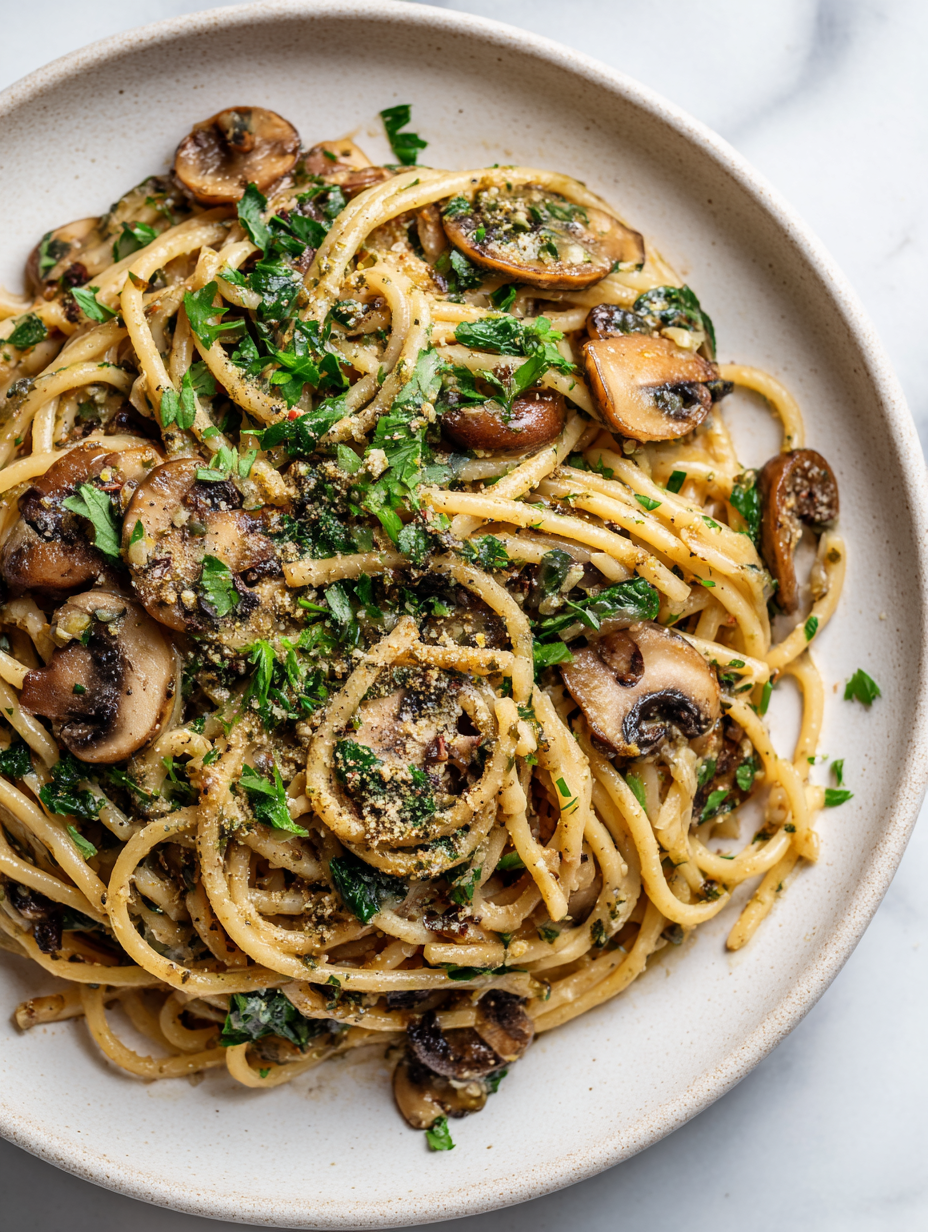
Vegan Mushroom Pasta with Umami Boost
Ingredients
Equipment
Method
- Bring a large pot of salted water to a boil and cook your pasta until al dente, about 8-10 minutes. Drain and set aside.
- While the pasta cooks, heat olive oil in a large skillet over medium heat until shimmering and fragrant.
- Add the minced garlic and finely chopped shallot to the skillet. Sauté until fragrant and translucent, about 2 minutes, with a gentle sizzle and a fragrant aroma filling the air.
- Stir in the sliced fresh mushrooms and cook, stirring occasionally, until they release moisture and turn golden brown, about 5-7 minutes. The mushrooms should smell earthy and become slightly caramelized.
- Sprinkle the dried mushroom powder over the mushrooms, stirring to evenly coat and release its smoky aroma, about 30 seconds.
- Pour in the plant-based cream and stir well to combine. Bring to a gentle simmer and cook for 3-5 minutes until the sauce thickens slightly, watching for a velvety, glossy texture.
- Add the cooked pasta to the skillet and toss gently to coat all the noodles evenly with the rich, earthy sauce. Warm through for another minute, allowing the flavors to meld together.
- Finish by stirring in fresh lemon juice and season with salt and pepper to taste. The sauce should be silky and cling to the pasta, with a deep, savory aroma and a glossy appearance.
- Serve immediately, garnished with fresh herbs if desired. Enjoy the velvety, umami-packed vegan mushroom pasta that’s perfect for a cozy dinner.
Pro tips for vegan mushroom pasta
- Sear mushrooms until golden for a smoky depth that intensifies flavor.
- Use a gentle simmer when adding cream to prevent breaking and maintain silkiness.
- Add dried mushroom powder early to let it release full umami aroma before liquids go in.
- Toss pasta in the sauce off heat to avoid overcooking and keep it velvety.
- Stir the sauce frequently after adding liquids to prevent sticking and develop even flavor.
- Finish with a squeeze of lemon to brighten earthy mushroom flavors and balance richness.
Common mistakes and how to fix them
- FORGOT to preheat the pan → Always heat oil before adding ingredients.
- DUMPED too much water → Use just enough to cook pasta al dente, not soupy.
- OVER-TORCHED mushrooms → Sauté at medium heat, not high, to avoid burning.
- MISSED stirring after adding cream → Stir continuously until sauce thickens smoothly.
Quick fixes and pantry swaps
- When sauce is too thick, splash in hot water to shimmer back to silky smoothness.
- Splash a little lemon juice or vinegar if sauce lacks brightness and freshness.
- Patch over burnt bits with a bit of extra cream or water—quick fix for smoky notes.
- Shield over watery pasta by tossing in a handful of grated vegan cheese or breadcrumbs.
- When you forget to salt the water, sprinkle salt into the sauce for an instant flavor boost.
Prep, store, and reheat tips
- Prep the mushroom sauce components ahead: sauté mushrooms and aromatics, then store in the fridge for up to 2 days, their earthy aroma intensifying overnight.
- Cook the pasta in advance, drain, and toss with a little olive oil to prevent sticking; refrigerate for up to 1 day. Reheat in boiling water briefly or in the microwave until steaming.
- Store leftovers in an airtight container for up to 3 days. The sauce may thicken; stir in a splash of plant-based milk or water while reheating to restore creaminess.
- Reheat gently over low heat, stirring frequently. The sauce should shimmer and smell savory with a hint of earthiness, ready to be enjoyed again.
Top questions about vegan mushroom pasta
1. How does dried mushroom powder enhance flavor?
Use dried mushroom powder to boost umami; it’s concentrated and smoky, adding depth without extra salt.
2. How do I know when mushrooms are cooked properly?
Cook the mushrooms until golden and fragrant, about 7 minutes. They should smell earthy and slightly caramelized.
3. What’s the best vegan cream for this dish?
Use a plant-based cream like cashew or oat for a velvety sauce. Stir well and avoid boiling aggressively to prevent curdling.
4. When should I add lemon juice?
Add lemon juice at the end to brighten the earthy flavors. It should shimmer and smell fresh and citrusy.
5. How do I tell when the pasta is done?
Cook pasta al dente, about 8-10 minutes. It should be tender but still have a slight bite.
6. What’s the right temperature for sautéing garlic and shallots?
Sauté aromatics on medium heat (around 160°C/320°F). They should be fragrant and translucent, not burnt.
7. How do I keep the sauce smooth?
Stir the sauce constantly after adding cream to keep it silky and prevent breaking.
8. What if my sauce gets too thick?
If the sauce thickens too much, add a splash of water or plant milk. It should shimmer and coat the noodles smoothly.
9. How should I store and reheat this dish?
Store leftovers in an airtight container for up to 3 days. Reheat gently to preserve creaminess and aroma.
10. Can I substitute olive oil with something else?
Use a good-quality olive oil for sautéing; it adds subtle fruitiness and prevents sticking.
This dish isn’t just about the earthy umami — it’s about embracing those small, honest flavors that make cooking feel genuine. When the aroma of sautéed mushrooms and garlic fills the kitchen, it’s like a quiet reminder that simple ingredients can create something memorable.
In times when comfort food feels just right, this pasta offers a cozy, satisfying bite that’s quick to pull together but feels rich in tradition. It’s a reminder that sometimes, the best meals are the ones rooted in humble, well-loved ingredients, cooked with care and a little bit of patience.