
Vegan paella might sound like an oxymoron at first, but it’s a dish that surprises with its depth and warmth. I’ve always loved the idea of transforming traditional Spanish flavors into plant-based magic, especially when sharing with friends who aren’t vegan. It’s honest cooking—just simple ingredients, bold flavors, and a bit of patience.
This version is my go-to when I want something hearty and colorful, but also light enough to enjoy on a busy weeknight. The aroma of saffron, smoky paprika, and roasted vegetables fills the kitchen and instantly lifts the mood. Plus, it’s flexible—whatever seasonal veg you have can shine here, making every batch a little different, a little personal.
Focusing on how vegan paella can be a comforting, vibrant dish that reconnects us with traditional Spanish flavors while showcasing plant-based ingredients in a way that surprises and satisfies.
Reviving Tradition with Plant Power
- I love how this dish brings together the cozy warmth of saffron and smoky paprika, filling the kitchen with a comforting aroma.
- There’s a rush of pride when I see the vibrant colors of roasted peppers and green beans nestled in that perfectly crusty bottom.
- Sharing this paella with friends, knowing it’s entirely plant-based, always sparks conversations and surprised smiles.
- Sometimes, I get nostalgic for summer evenings in Spain, and this recipe helps me relive those breezy, sunlit memories.
Reviving Tradition with Plant Power
- This recipe was born out of a rainy weekend when I had a bunch of leftover vegetables and a craving for something warm and filling. I didn’t want to settle for soup or stir-fry, so I started experimenting with what I had—smoky paprika, saffron, and a handful of garden peas. The aroma of saffron and roasted peppers took me straight back to a summer trip to Spain, and I knew I was onto something special.
- It’s funny how a simple dish can carry so much memory—those vibrant colors, the crackle of rice forming a crust, the way everyone gathers around the table eager to dig in. Making this paella feels like reclaiming a tradition, but with a twist that’s kind to the planet and the palate. Every time I make it, I remember that good food doesn’t need to be complicated to be unforgettable.
- heading:
Paella’s Colorful History
- Paella originated in Valencia, Spain, as a humble dish cooked over open fires with local rice, vegetables, and meats.
- The saffron used in traditional paella was once so valuable that it was traded like gold, giving the dish its distinctive golden hue.
- Vegan adaptations of paella are a modern twist, embracing plant-based ingredients while honoring the dish’s communal, celebratory roots.
Key Ingredients and Tips
- Basmati rice: I prefer the fluffy, long grains that soak up saffron broth beautifully—look for fragrant, aged rice for the best texture. Skip quick-cook options; they turn mushy.
- Saffron: That tiny pinch releases a golden, floral aroma—don’t skimp. If you want a more pronounced flavor, steep it in warm water before adding. Substitute with turmeric if you need a budget-friendly, less aromatic option.
- Bell peppers: Roasted until charred for smoky sweetness, then chopped—adds vibrant color and depth. Fresh peppers provide crunch, but roasted ones give that caramelized, smoky touch.
- Green beans: I like them crisp-tender, just blanched briefly—bright, grassy flavor. If you prefer softer veg, cook longer, but keep an eye so they don’t turn to mush.
- Vegetable broth: Use a rich, homemade or store-bought broth—boosts flavor instantly. If you’re in a pinch, a good quality cube dissolved in water works, but it won’t be quite as layered.
- Olive oil: A generous splash at the start and finish adds a fruity, peppery note—choose a good extra virgin. Skip if you want a lighter dish, but it really enhances the overall aroma.
- Artichoke hearts: Marinated or fresh, they add a tender, tangy bite—look for ones packed in brine. If you can’t find them, roasted zucchini or eggplant can fill in with a similar hearty feel.
Spotlight on key ingredients
Saffron:
- That tiny pinch releases a golden, floral aroma—don’t skimp. Steep it in warm water for a more intense flavor, or substitute with turmeric if you need a budget-friendly alternative that still imparts a warm hue.
- I love how saffron blooms into a rich, fragrant broth that coats each grain, giving the dish its signature color and aroma.
Bell Peppers:
- Roasted until charred for smoky sweetness, then chopped—adds vibrant color and depth. Fresh peppers provide crunch, but roasted ones give that caramelized, smoky touch, making every bite richer and more complex.
- Their smoky aroma during roasting is irresistible, and their tender, caramelized edges add a sweet, slightly bitter contrast to the savory rice.
Ingredient Swaps & Tips
- Dairy-Free: Use coconut milk instead of any cream or butter for added richness and a subtle tropical flavor.
- Gluten-Free: Opt for short-grain rice like arborio if you want a creamier texture, or stick with traditional rice for authenticity.
- Soy-Free: Swap soy sauce with coconut aminos to keep the umami depth without soy allergens.
- Low-Sodium: Use a reduced-salt vegetable broth and skip adding extra salt until tasting—brightens the dish without overwhelming saltiness.
- Frozen Vegetables: Use frozen bell peppers or peas if fresh aren’t available—just add a couple of extra minutes to cook through.
- Smoked Paprika: If you don’t have smoked, regular paprika works, but it won’t have that deep smoky aroma—consider a quick splash of liquid smoke if you like.
- Artichokes: Canned or frozen artichoke hearts work well; drain thoroughly to avoid excess moisture and sogginess.
Equipment & Tools
- Wide paella or skillet: Allows even heat distribution and proper rice spread
- Wooden spatula: For gentle stirring and spreading ingredients
- Measuring spoons: Accurate measurement of saffron and spices
- Heat-resistant spoon: Tasting and adjusting seasoning during cooking
Step-by-step Guide to Vegan Paella
- Gather your equipment: a wide, shallow skillet or paella pan (30-40cm diameter), a wooden spatula, measuring spoons, and a heat-resistant spoon for tasting. Preheat your oven to 200°C (390°F) if roasting vegetables ahead.
- Heat 2 tablespoons olive oil over medium heat (around 160°C / 320°F). Add chopped onion and minced garlic; sauté until translucent, about 5 minutes. The aroma should be warm and comforting.
- Stir in smoked paprika and a pinch of saffron threads; cook for 30 seconds until fragrant. This releases the smoky, floral notes that form the flavor base.
- Add chopped bell peppers, green beans, and your choice of vegetables. Roast for 8-10 minutes, stirring occasionally until they develop a slight char and become tender. If they start to burn, lower the heat.
- Pour in 1 liter vegetable broth (keep it warm). Stir in the rice, spreading it evenly. Bring to a simmer and reduce heat to medium-low (around 85°C / 185°F). Cook uncovered for 15 minutes, stirring once or twice, until rice absorbs most of the liquid. Check for a gentle crackle on the bottom—that’s the socarrat forming.
- Adjust salt and pepper. Add artichoke hearts or other hearty vegetables. Continue cooking for another 5 minutes, until rice is tender and some liquid remains. If the rice is too firm, cover and steam off heat for 2-3 minutes.
- Remove from heat. Cover loosely with a towel and let rest for 5 minutes. This allows flavors to meld and the rice to finish absorbing moisture. The top should be slightly crispy, with a golden crust on the bottom.
Let the paella sit covered for 5 minutes. Serve directly from the pan, garnished with fresh herbs if desired. The crusty socarrat is the reward—don’t skip scraping some onto your plate.
How to Know It’s Done
- The rice on top should be tender but not mushy, with a slight bite.
- The socarrat (bottom crust) should be golden and crackly, not burnt or soggy.
- Vegetables should be roasted and caramelized, with a smoky aroma filling the air.
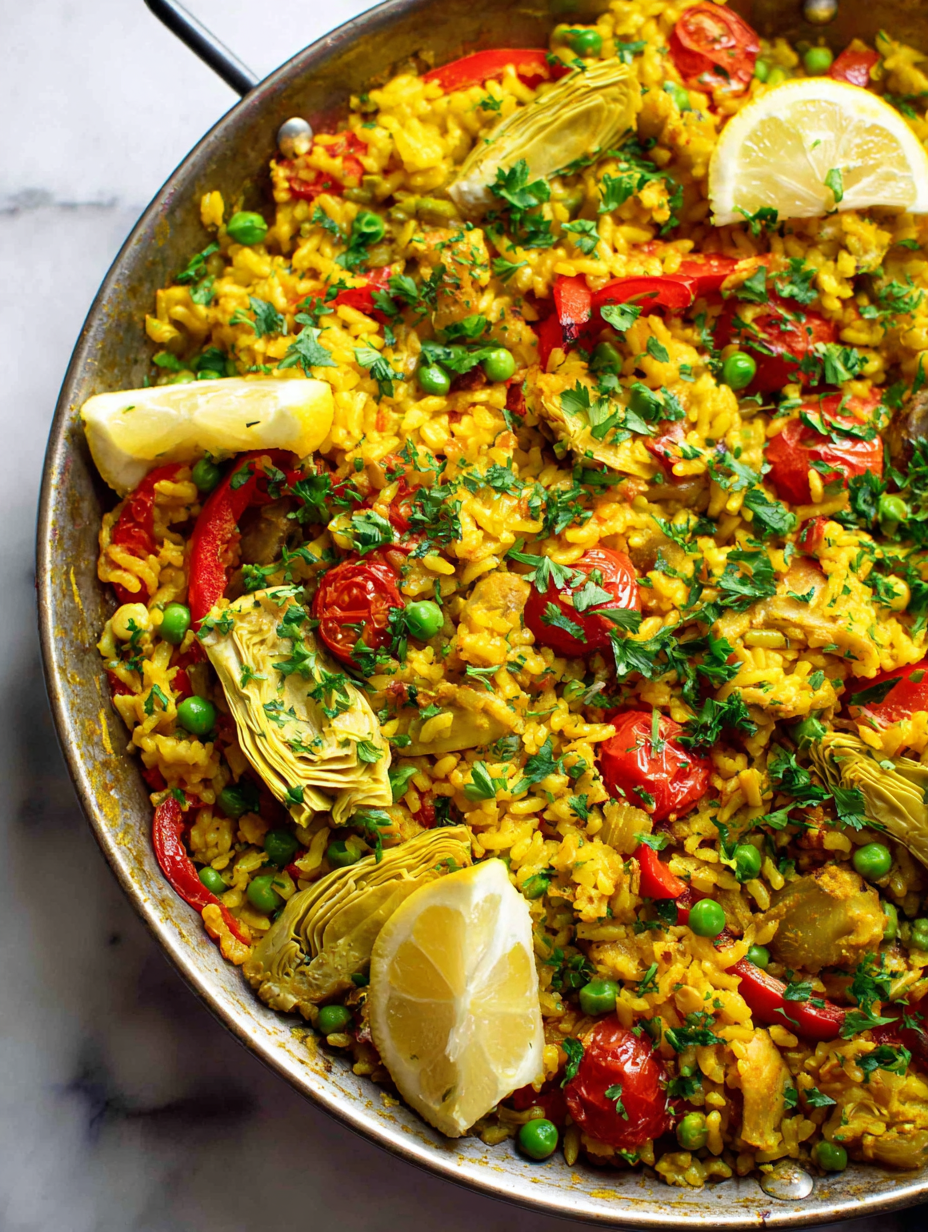
Vegan Paella
Ingredients
Equipment
Method
- Heat the olive oil in a wide pan over medium heat until shimmering and fragrant.
- Add the chopped onion and minced garlic; sauté until translucent and fragrant, about 5 minutes, until the onion begins to soften and turn slightly golden.
- Stir in smoked paprika and steeped saffron threads (including the soaking water); cook for 30 seconds to release their aromatic oils.
- Add the chopped roasted bell pepper and blanched green beans; cook for 8-10 minutes, stirring occasionally, until they develop a smoky aroma and soften slightly.
- Pour in the warm vegetable broth and bring to a gentle simmer. Stir in the rice, spreading it evenly across the pan.
- Reduce the heat to medium-low and cook uncovered for about 15 minutes, stirring once or twice, until the rice absorbs most of the broth and begins to develop a crust on the bottom—that’s the socarrat forming.
- Add the drained artichoke hearts and season with salt and pepper to taste. Continue cooking for another 5 minutes, until the rice is tender and the vegetables are heated through.
- Remove the pan from heat, cover loosely with a towel, and let rest for 5 minutes to allow the flavors to meld and the crust to develop further.
- Serve your vibrant vegan paella directly from the pan, ensuring some crispy socarrat is served on each plate—enjoy the smoky, tender, colorful bites!
Pro Tips for Perfect Paella
- Bolded mini-head: Use a wide, shallow pan to promote even rice contact and better socarrat formation.
- Bolded mini-head: Toast spices like paprika and saffron in oil for 30 seconds to unlock full aroma and flavor.
- Bolded mini-head: Add vegetables in stages—roast firmer ones first, softer last to prevent overcooking.
- Bolded mini-head: Keep broth warm; adding cold liquid can slow cooking and affect rice texture.
- Bolded mini-head: For a perfect socarrat, increase heat in the final minutes until you hear a gentle crackle.
- Bolded mini-head: Rest the paella off heat, covered, for 5 minutes to allow flavors to meld and crust to develop.
- Bolded mini-head: If rice is undercooked, add a splash of hot broth and steam covered for 2 minutes.
Common Mistakes and How to Fix Them
- FORGOT to check rice texture → Cover and steam for even cooking.
- DUMPED too much broth → Remove excess to prevent mushiness.
- OVER-TORCHED socarrat → Lower heat and add a splash of water to revive.
- MISSED seasoning adjustments → Taste and adjust salt before serving.
Quick Fixes and Pantry Hacks
- When rice is undercooked → Splash hot broth, cover, and steam for 2 minutes.
- If socarrat doesn’t form → Increase heat just until crackling begins, then lower immediately.
- DUMPED too much broth → Remove excess with a spoon before rice becomes mushy.
- Over-torched bottom → Remove pan from heat, add a splash of water, and gently scrape to revive.
- Splash extra oil if rice sticks or is too dry—shimmering oil helps loosen and add shine.
Prep, store, and reheat tips
- Prep vegetables like peppers and green beans a day ahead; store in airtight containers in the fridge—bright and ready to roast or sauté.
- Cook the rice and steep saffron in warm water the night before; keep covered in the fridge—fluffy and fragrant when reheated.
- Assemble the broth and measure out spices ahead; keep separate in small jars—easy to add during reheating, maintaining rich aroma.
- Refrigerate leftovers in an airtight container for up to 2 days—expect rice to be slightly firmer, flavors mellow but still vibrant.
- Reheat gently in a skillet or covered pan over low heat (around 85°C / 185°F), adding a splash of broth if rice looks dry—watch for steam and aroma revival.
Top questions about vegan paella
1. What kind of pan should I use?
Use a wide, shallow pan to ensure even cooking and a good socarrat formation. It helps the rice cook uniformly and develop that crusty bottom.
2. How do I get the best saffron flavor?
Steep saffron in warm water for about 10 minutes before adding it to the rice. It releases more aroma and color.
3. Can I use regular paprika instead of smoked?
Yes, you can substitute regular paprika for smoked paprika, but you’ll miss out on that smoky depth. Consider adding a drop of liquid smoke for more flavor.
4. How do I prevent the vegetables from turning mushy?
Add vegetables in stages—firmer ones first, softer ones later—to prevent overcooking and retain texture and flavor.
5. How should I reheat leftovers?
Reheat paella gently on the stovetop over low heat, adding a splash of broth if needed. Cover loosely and let steam for a few minutes until warm.
6. What if the rice isn’t cooked through?
If the rice is undercooked, add a little hot broth and cover to steam for a couple of minutes. For overcooked, try to serve immediately to avoid mushiness.
7. Can I use water instead of broth?
Use vegetable broth instead of water for richer flavor. If you want a more intense broth, simmer it with aromatics for 15-20 minutes before using.
8. Can I use frozen vegetables?
Frozen peas or peppers are fine—just add a few extra minutes during cooking. Fresh will give a brighter flavor and texture.
9. What rice is best for paella?
Use arborio or other short-grain rice for creamier texture. Long-grain rice is traditional but can be less sticky and creamy.
10. How do I know when the socarrat is ready?
Look for a crusty, golden bottom called socarrat—this is a sign of proper heat and caramelization. It crackles when ready.
Making vegan paella feels like reclaiming a classic with a fresh perspective. The aroma of saffron and smoky peppers is a reminder that simple ingredients can surprise and satisfy. It’s a dish that brings people together, no matter what’s on your plate.
Whenever I cook this, I’m reminded of how vibrant and comforting plant-based food can be. It’s honest, imperfect, and full of flavor—just like the best memories around a shared meal. That crusty socarrat at the bottom is a little victory every time.