
Vegan sesame noodles might seem like a simple dish, but it carries a nostalgic punch that takes me right back to school lunches. There’s something about the chewy noodles coated in that glossy, nutty sesame sauce that feels like a hug from childhood, even when made plant-based and fresh. It’s a quick fix for busy days, yet it’s packed with enough flavor to satisfy a craving for something familiar and comforting.
What keeps me coming back to this recipe is how adaptable it is. I love tossing in whatever greens or veggies I have on hand—crisp bell peppers, tender snap peas, or even a handful of fresh herbs. It’s a dish that feels like a warm blanket, but with a little twist of chaos from the bright, sesame-bright sauce. It’s my way to reconnect with that messy joy of eating school lunch, but smarter and more mindful.
Focusing on the nostalgic comfort of childhood school lunches, reinvented with vibrant, plant-based ingredients and a punch of sesame flavor. This dish is my way of reconnecting with simple, messy joy, turned modern and mindful.
The story behind this recipe
- This recipe was born out of a lazy Sunday craving for something familiar yet fresh. I remembered how my grandma used to toss simple noodles with sesame oil and soy, but I wanted to elevate that with more punch and depth. One afternoon, I started experimenting with different sesame pastes, a splash of rice vinegar, and a dash of chili—totally transformed the dish into something addictive. It’s a reminder that even the simplest ingredients, when combined thoughtfully, can surprise you.
- I love how this dish always feels like a small rebellion against the usual weeknight dinner. It’s quick, messy, and so satisfying—perfect after a long day when I just want something honest on my plate. Plus, the smell of toasted sesame oil bubbling into the sauce is pure comfort, a little bit chaotic but warmly familiar. It’s become my go-to for those moments when I need something reliable but with a kick.
- heading: ‘The story behind this recipe’
Ingredient breakdown: key components
- Sesame paste: I love the nutty, deep flavor of tahini or toasted sesame paste; it gives the sauce its core. Swap for sunflower seed butter if you want a milder, less intense nuttiness.
- Noodles: Chewy rice or soba noodles are my go-to—they soak up the sauce beautifully. For gluten-free, try kelp noodles, but note they’ll have a different texture and flavor.
- Soy sauce: Brings that savory umami punch; I prefer low-sodium to control salt. Coconut aminos can be a sweeter, milder alternative, but it alters the saltiness.
- Rice vinegar: Adds brightness and tang; I love the zing it offers. Apple cider vinegar works in a pinch but can be slightly fruitier and less sharp.
- Sesame oil: Just a teaspoon lifts the whole dish with a warm, toasty aroma. Be careful not to overdo it—too much can be overpowering, like a smoky punch.
- Garlic & ginger: Fresh is best for that punchy, spicy aroma. If pressed for time, pre-minced jars work, but fresh gives more vibrancy.
- Veggies & herbs: I toss in crunchy cucumbers, scallions, or cilantro for freshness. Feel free to mix in shredded carrots or bell peppers for extra crunch and color.
Spotlight on key ingredients
Sesame paste:
- I love the nutty, deep flavor of tahini or toasted sesame paste; it gives the sauce its core. Swap for sunflower seed butter if you want a milder, less intense nuttiness.
- Noodles: Chewy rice or soba noodles are my go-to—they soak up the sauce beautifully. For gluten-free, try kelp noodles, but note they’ll have a different texture and flavor.
- Sesame oil: Just a teaspoon lifts the whole dish with a warm, toasty aroma. Be careful not to overdo it—too much can be overpowering, like a smoky punch.
Sesame seeds:
- Noodles: They’re the backbone of the dish—chewy, resilient, and perfect for soaking up every drop of sauce. Soba or rice noodles work best for that authentic texture.
- Sesame oil: Adds a warm, toasty aroma that makes the dish feel rich and inviting. A little goes a long way—don’t overdo it or it’ll overpower everything else.
- Toasted sesame seeds: They’re the finishing touch—crunchy, nutty, and fragrant. Toast until golden and add just before serving for maximum aroma.
Notes for ingredient swaps
- Sesame paste: I love the nutty, deep flavor of tahini or toasted sesame paste; it gives the sauce its core. Swap for sunflower seed butter if you want a milder, less intense nuttiness.
- Noodles: Chewy rice or soba noodles are my go-to—they soak up the sauce beautifully. For gluten-free, try kelp noodles, but note they’ll have a different texture and flavor.
- Soy sauce: Brings that savory umami punch; I prefer low-sodium to control salt. Coconut aminos can be a sweeter, milder alternative, but it alters the saltiness.
- Rice vinegar: Adds brightness and tang; I love the zing it offers. Apple cider vinegar works in a pinch but can be slightly fruitier and less sharp.
- Sesame oil: Just a teaspoon lifts the whole dish with a warm, toasty aroma. Be careful not to overdo it—too much can be overpowering, like a smoky punch.
- Garlic & ginger: Fresh is best for that punchy, spicy aroma. If pressed for time, pre-minced jars work, but fresh gives more vibrancy.
- Veggies & herbs: I toss in crunchy cucumbers, scallions, or cilantro for freshness. Feel free to mix in shredded carrots or bell peppers for extra crunch and color.
Equipment & Tools
- Large pot: Boil noodles efficiently in a large volume of water.
- Skillet or wok: Cook sauce ingredients and toss noodles for even coating.
- Measuring cups and spoons: Ensure accurate liquid and seasoning measurements.
- Tongs or fork: Toss and serve noodles without breaking them.
Step-by-step guide to vegan sesame noodles
- Equipment & Tools: Gather a large pot for boiling noodles, a skillet or wok for sauce, a measuring cup for liquids, and tongs or a fork for tossing.
- Bring a large pot of water to a boil—about 100°C (212°F). Add noodles and cook according to package instructions, usually 8-10 minutes for rice or soba, until al dente. Drain and rinse with cold water to stop cooking and prevent sticking.
- While noodles cook, toast sesame seeds in a dry skillet over medium heat until golden and fragrant—about 2 minutes. Set aside.
- In the same skillet, heat 1 teaspoon sesame oil over medium heat. Add minced garlic and ginger, cook until fragrant—about 30 seconds. Be careful not to burn them; they should smell spicy and warm.
- Add 3 tablespoons tahini or toasted sesame paste to the skillet. Pour in 2 tablespoons soy sauce, 1 tablespoon rice vinegar, and 1 teaspoon maple syrup or agave. Whisk until smooth and slightly thickened, about 2-3 minutes. The sauce should be glossy and aromatic.
- Taste and adjust: if too thick, add a splash of warm water. If too salty, a squeeze of lemon juice helps brighten. If you prefer more heat, toss in a dash of chili flakes now.
- Add cooked noodles directly into the skillet with the sauce. Toss well over medium heat for 1-2 minutes, allowing the noodles to absorb the flavors. They should shimmer with sauce and smell nutty and tangy.
- Check for doneness: the noodles should be coated evenly, shiny, and slightly sticky to the touch. If they start to stick or dry out, splash a little hot water and toss again.
- Remove from heat and immediately toss in toasted sesame seeds. Let sit for 2-3 minutes to meld flavors. Finish with chopped scallions or cilantro if desired.
- Serve warm or at room temperature. For best flavor, let the noodles rest for 5 minutes before serving to allow the sauce to set and flavors to deepen.
Toss noodles with sauce, then serve immediately or let rest for 5 minutes for deeper flavor. Garnish with sesame seeds and herbs just before serving for added texture and freshness.
How to Know It’s Done
- Noodles are cooked al dente, not mushy or underdone.
- Sauce is glossy, aromatic, and coats noodles evenly.
- Noodles shimmer with sesame oil and are infused with garlic and ginger aroma.
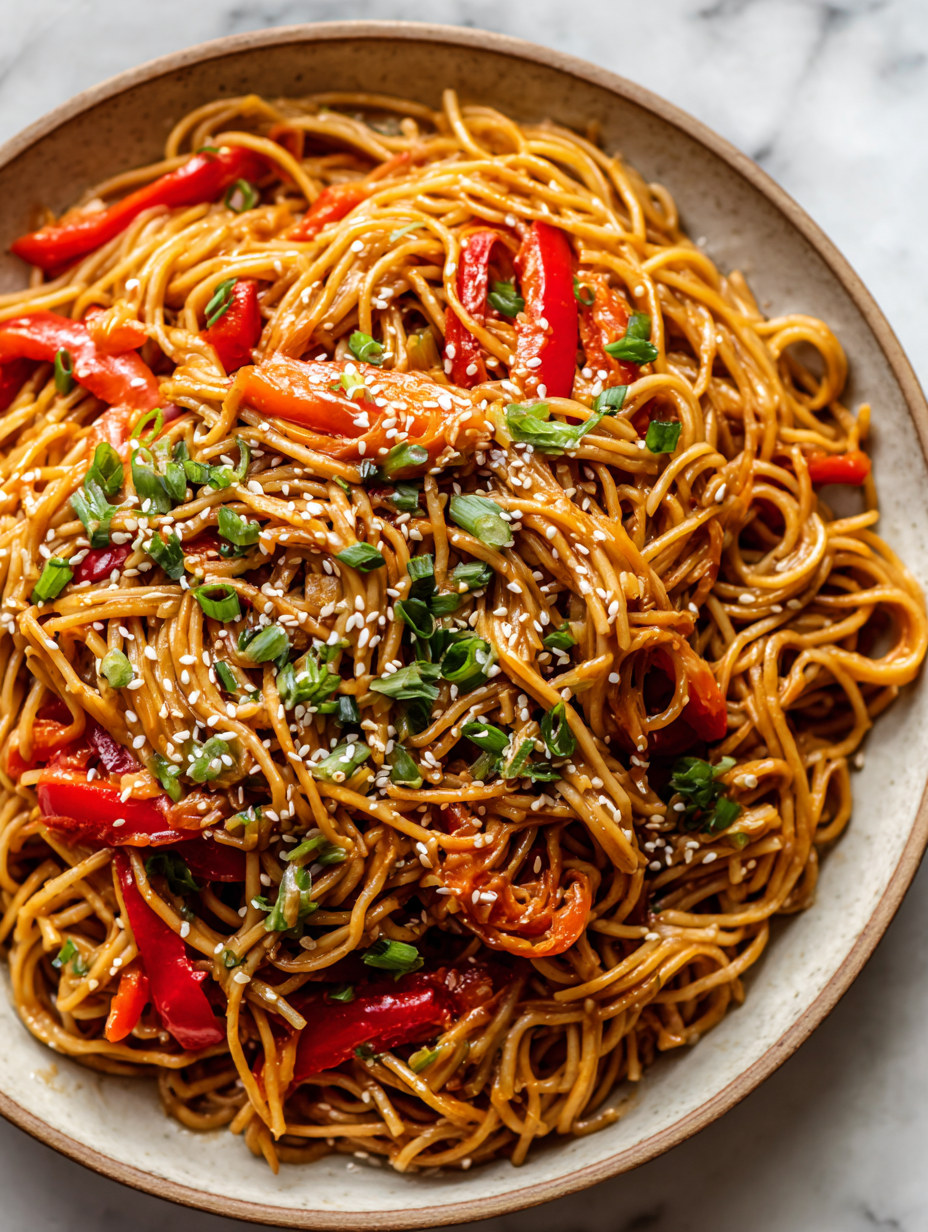
Vegan Sesame Noodles
Ingredients
Equipment
Method
- Bring a large pot of water to a boil, then add the noodles and cook until just al dente, about 8-10 minutes. Drain and rinse with cold water to stop cooking and set aside.
- While the noodles cook, toast sesame seeds in a dry skillet over medium heat until golden and fragrant, about 2 minutes. Remove from heat and set aside.
- Heat 1 teaspoon of toasted sesame oil in the same skillet over medium heat. Add minced garlic and grated ginger, cooking until fragrant, about 30 seconds. Stir constantly to prevent burning.
- Add tahini, soy sauce, rice vinegar, and maple syrup to the skillet. Whisk continuously until the mixture is smooth, glossy, and slightly thickened, about 2-3 minutes. Adjust with a splash of warm water if too thick.
- Add the cooked noodles to the skillet with the sauce. Toss gently with tongs or a fork, coating each strand evenly. Cook for another 1-2 minutes until heated through and glossy.
- Stir in your choice of fresh vegetables and cook just until they are slightly tender but still crisp, about 2 minutes. Remove from heat.
- Transfer the noodles to a serving dish. Garnish with toasted sesame seeds and chopped cilantro or scallions. Serve immediately for the best flavor and texture.
Notes
Tips & Tricks for Perfect Noodles
- Toast sesame seeds until golden and fragrant for a nutty aroma that really shines.
- Whisk your sauce vigorously—this helps the tahini emulsify and create a silky, glossy coating.
- Cook noodles just until al dente—resist overcooking, or they’ll become mushy when tossed with hot sauce.
- Use a splash of hot water to loosen thick sauce—smooth and easier to coat every noodle evenly.
- Add garlic and ginger over medium heat—fragrant and warm without burning, which keeps the sauce fresh.
- Let the noodles rest for 5 minutes after tossing—flavors deepen and sauce thickens slightly.
- Finish with a sprinkle of toasted sesame seeds—crunchy texture and an extra punch of sesame aroma.
Common mistakes and how to fix them
- FORGOT to toast sesame seeds? Lightly toast until fragrant and golden for best flavor.
- DUMPED the sauce too early? Let it simmer until glossy and slightly thickened before tossing noodles.
- OVER-TORCHED the garlic? Cook on lower heat, fragrant aroma should be spicy and warm, not burnt.
- MISSED the noodle doneness test? Al dente is firm but tender, not mushy or undercooked.
Quick fixes and pantry swaps
- If sauce is too thick, splash in warm water and whisk until silky.
- When noodles stick, toss with a teaspoon of sesame oil before serving.
- Splash soy sauce if flavor feels dull or bland after tossing.
- Patch burnt garlic by starting over with fresh garlic and ginger.
- Shield noodles from drying out by covering with a damp towel if waiting to serve.
Prep, store, and reheat tips
- Cook the noodles ahead and toss with a little sesame oil to prevent sticking; store in an airtight container for up to 2 days. They might absorb some sauce, so toss with a splash of warm water before serving.
- Prepare the sesame sauce up to a day in advance; keep chilled in a jar. The flavors deepen overnight, but give it a good whisk before using to reincorporate any separation.
- Chop herbs and veggies in advance; store separately in airtight containers. Freshness lasts 1-2 days in the fridge, but expect some wilting—add greens just before serving for maximum crunch.
- Reheat noodles gently—either in the microwave for 30 seconds or in a skillet with a splash of water over low heat. Watch for sogginess; aim for warm, slightly sticky noodles with a nutty aroma. Avoid overheating to prevent dryness.
Top questions about vegan sesame noodles
1. Can I use a different type of nut butter?
Use toasted sesame paste or tahini for a richer, nuttier flavor that coats noodles beautifully. Sunflower seed butter is a milder alternative, but it’s less intense.
2. Are rice or soba noodles necessary?
Yes, kelp noodles are a great gluten-free option, but they’re more crunchy and have a sea-like flavor. Rice noodles are classic and absorb the sauce well.
3. What can I swap for soy sauce?
Coconut aminos are a good soy sauce substitute with a slightly sweeter, milder taste. They won’t give quite the same depth of umami, but work well.
4. Can I replace rice vinegar?
Apple cider vinegar adds a bright, tangy note. Lemon juice can be used for a fresh, citrusy kick, especially if you want more zing.
5. How much sesame oil should I use?
A teaspoon of toasted sesame oil is enough to add warmth and aroma. Too much can be overpowering and smoky, so add gradually.
6. Can I use dried garlic or ginger?
Fresh garlic and ginger give the best punch and aroma. Pre-minced jars work in a pinch, but fresh is more vibrant and fragrant.
7. What vegetables work best?
Add crunchy vegetables like cucumbers, shredded carrots, or bell peppers for freshness and texture. Fresh herbs like cilantro or scallions brighten the dish.
8. What if my sauce is too thick?
If the sauce is too thick, whisk in a splash of warm water to loosen it up and make it glossy again.
9. How do I prevent overcooking the noodles?
Overcooked noodles become mushy. Cook just until al dente and rinse to stop cooking immediately, then toss with sauce while still warm.
10. How can I stop noodles from sticking?
If noodles stick together, toss them with a little sesame oil before serving to keep them separate and shiny.
These noodles feel like a small act of rebellion—simple, honest, and deeply satisfying. The aroma of toasted sesame and garlic lingering on the plate makes every bite a nostalgic reminder of carefree days, but with a mindful twist.
In a world that’s constantly rushing, this dish offers a moment to slow down and enjoy the familiar comfort of sesame-coated noodles. It’s messy, quick, and just the right kind of imperfect—perfect for pulling together when time is tight but flavor still counts.